AI Consulting

AI consulting should end with a decision you can act on, not a strategy deck. CodeFish works out where AI is worth the money in your business — which tasks it can take over, what the data work underneath will cost, what each one returns — and builds the ones that clear the bar.

AI consulting that ends in a build worth doing — or an honest not yet.

The four questions AI consulting has to answer

Any engagement that does not answer all four has left the decision where it started.

Where does AI actually fit here?

Which specific recurring tasks in this business have rules that can be written down and outcomes that can be counted. Named tasks with hours against them — not "customer service" or "finance" as categories.

Is the foundation ready?

AI acts on data and follows rules. If the data is scattered across disconnected systems and the rules live in people's heads, that groundwork is the real first project — and it needs costing honestly rather than assumed away.

What does each option return?

Hours returned, errors removed, cost avoided, revenue enabled — per candidate, against the build cost and the cost of running it. This is the part most AI strategy work skips, and it is the only part a board can act on.

What are the risks we are accepting?

Where the model can be wrong, what that costs, who sees the exception, where the decision trail lives, and what your privacy and contractual obligations require. Decided before the architecture, not after.

What does an AI consultant actually do?

An AI consultant works out where AI is worth the money in a specific business — which tasks it can take over, what the data and process work underneath will cost, what each one returns in hours or dollars, and which ones to leave alone.

CodeFish Studio does this work for Australian businesses from Adelaide, mostly established operators in the $10–50M revenue range across logistics, manufacturing, mining and resources, food and beverage, health and NDIS, financial services and government. The difference from a management consultancy is that we also build and run what we recommend, so the recommendation has to survive being implemented.

The deliverable is a prioritised roadmap with numbers against each item, not a strategy document. If nothing on the list clears the bar, that is a legitimate result and a cheap way to find out.

AI consulting should end in a decision you can act on, not a strategy deck nobody builds.

How an engagement runs

Three steps, each priced before it starts. You can stop after any of them.

Rapid Insight Workshop

Two sessions with your key people mapping how the operation actually runs. $9,000 + GST. Around three weeks later you have a strategy, business case and product spec. You own it whether or not you build anything with us.

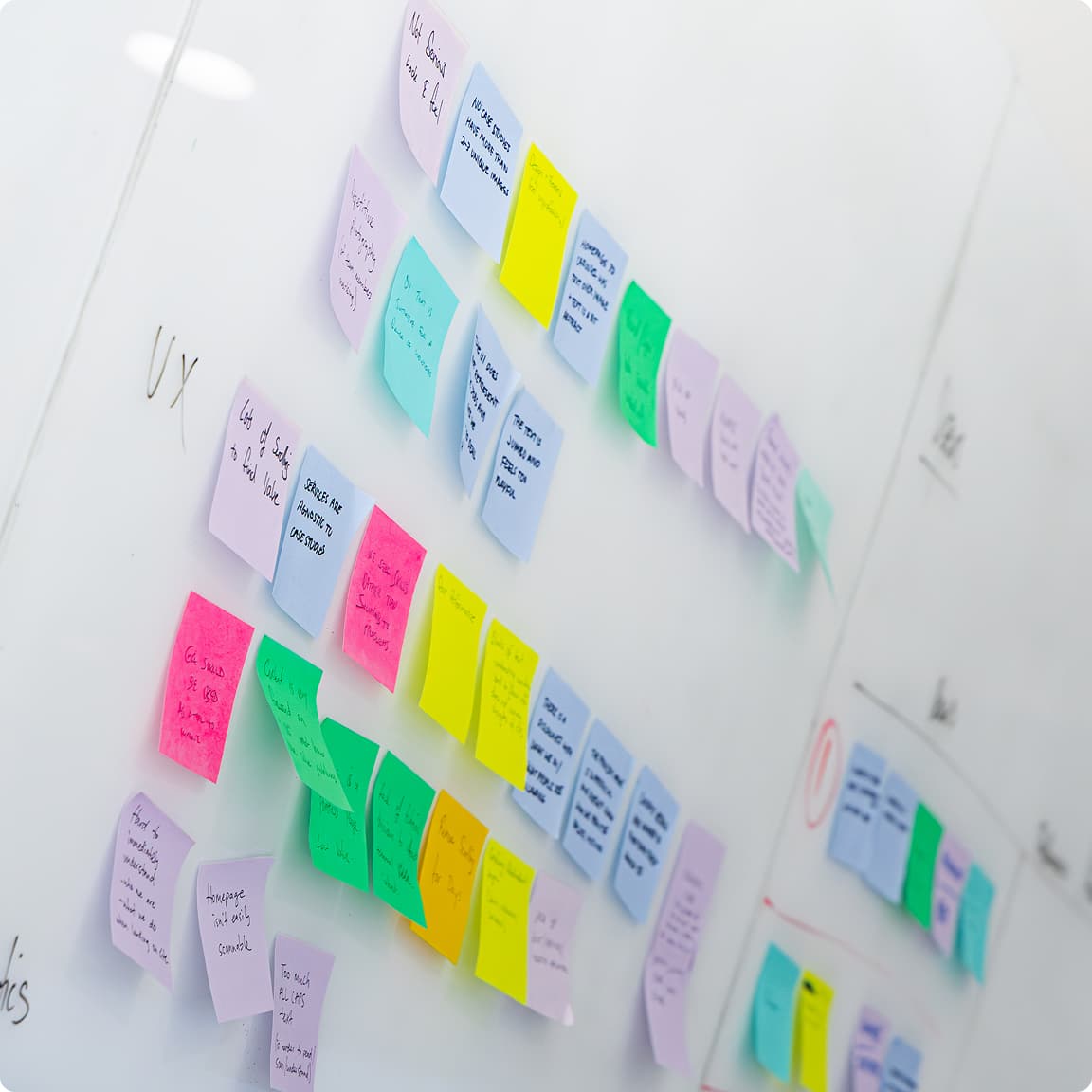
A whiteboard covered in colour-coded sticky notes from a UX workshop

Prove one job

The highest-return candidate, built on your own data and scoped to a single task, so you can judge real output before committing to more. Fixed price, quoted before it starts.

A CodeFish developer working across three monitors, reviewing code and version history

Run it against the number

Ongoing AI in production is delivered inside an Apex partnership, measured against outcomes agreed at the start. If it is not moving the number, we say so and change course.

Two CodeFish team members in discussion across a meeting room table, one taking notes

What does AI consulting cost, and how long does it take?

We price this as one fixed step, not a day rate: a Rapid Insight Workshop at $9,000 + GST. Two sessions with your key people, then a strategy, business case and product spec in your hands around three weeks later. Yours whether or not you build anything with us.

That is deliberate. Hourly advisory work rewards the consultant for taking longer, and a strategy engagement that ends in a document leaves the decision exactly where it started. A fixed price on a fixed deliverable means the cost of finding out is known before you start.

After the workshop, a first agent or automation reaching production is typically six to twelve weeks, longer where the data has to be connected first. Builds are quoted fixed-price before they start, and anyone quoting a production AI system in a fortnight is describing a demo.

When AI is not the right investment yet

Four situations where the honest advice is to spend the money elsewhere first.

The data is not reachable

If the information a model would need sits in five systems that do not talk, plus a shared drive and someone's inbox, the first project is connecting it — not the AI. That work has its own return, because people stop being the integration layer, but it should be costed and sequenced honestly rather than hidden inside an AI budget.

Nobody can write the rules down

If two experienced people in the business disagree on how a decision should be made, a model cannot be held to a standard because there is no standard. Getting the rule agreed is a process job, and it is usually where most of the value was hiding anyway.

The volume is too low to matter

AI pays off on recurring work. A task done a handful of times a month will not return a build, however annoying it is. The threshold to look for is roughly an hour a day of someone's time, or an error that carries real cost when it happens.

The real problem is a broken process

Some work exists only because a system was configured badly or a step was never removed. Automating it with a model makes the wrong outcome faster and harder to see. Fix or delete the process first; the AI case is often smaller and better afterwards.

How do you choose an AI consultant in Australia?

Shortlist on evidence of systems still running, not on strategy credentials. Four questions separate the field fast: can they show an AI system in production twelve months after launch and the number it moved; will they tell a client not to build; who owns the code, the data and the IP at the end; and what happens operationally when the model is wrong.

The Australian market splits into three groups. The large consultancies do strategy well and hand the build to someone else. The research and university end has deep capability but is built for research outcomes rather than production operations. Studios like CodeFish sit in the third group: smaller, and the same team takes it from the assessment through to the system running in production.

Be cautious of anyone quoting a production AI system in a fortnight, anyone whose case studies only show clean outputs, and any engagement that ends at a document.

AI consulting questions we get asked

Adelaide's AI capability splits between the defence and university research sector and a small number of commercial software studios that build production systems. CodeFish Studio is in the second group — an Adelaide-based team doing AI assessment, build and support for Australian mid-market operators, and delivering nationally from Adelaide. For a business looking for an operating system rather than a research outcome, that distinction is the one that matters when shortlisting.

A large consultancy will give you a strong strategy and then hand the build to an implementation partner, which puts a gap between the recommendation and the thing that has to work. We assess, build and run it with the same team, so a recommendation that cannot be implemented never makes it into the roadmap. The trade-off is scale: we are the right choice for a $10–50M operator, not for a national rollout across twenty business units.

The workshop is two sessions with your key people, with deliverables around three weeks later. A deeper readiness assessment across multiple functions runs two to four weeks. A first agent or automation in production is typically six to twelve weeks after that, longer where the data foundation has to be built first.

Bring the people who do the work, not just the people who manage it. That usually means an operations lead, someone from finance, and whoever keys the data or answers the customer emails every day. You do not need a data report or a list of AI ideas. Useful extras are a rough headcount per team, the systems you run (your ERP, CRM, spreadsheets, shared drives), and any task people complain about every week. We map the work as it happens in the sessions, so what matters most is that the people in the room can describe what they actually do, step by step.

Against a number agreed before the build starts, measured the same way after it goes live. For each candidate the roadmap records the baseline: hours a week spent on the task, error rate, turnaround time or cost per transaction. Once the system is running, we report against that same baseline, using your own records rather than our estimates. If an agent handling supplier emails was meant to return a set number of hours a week, you see whether it does. If the number does not move, we say so, and the next step is to fix it or stop it, not to find a softer measure.

Yes, and it happens. Roughly speaking, a fair share of the candidates that come out of a workshop do not clear the return bar, and some businesses leave with a data or process project instead of an AI one. Finding that out for $9,000 is the cheapest possible version of that answer.

You own the code, the data and the IP. There is no per-seat licence on a custom build and no platform you are locked into, and the work is documented so another team could maintain it. We would rather earn the next engagement by being useful than by being the only people who understand how it runs.