Logistics Services

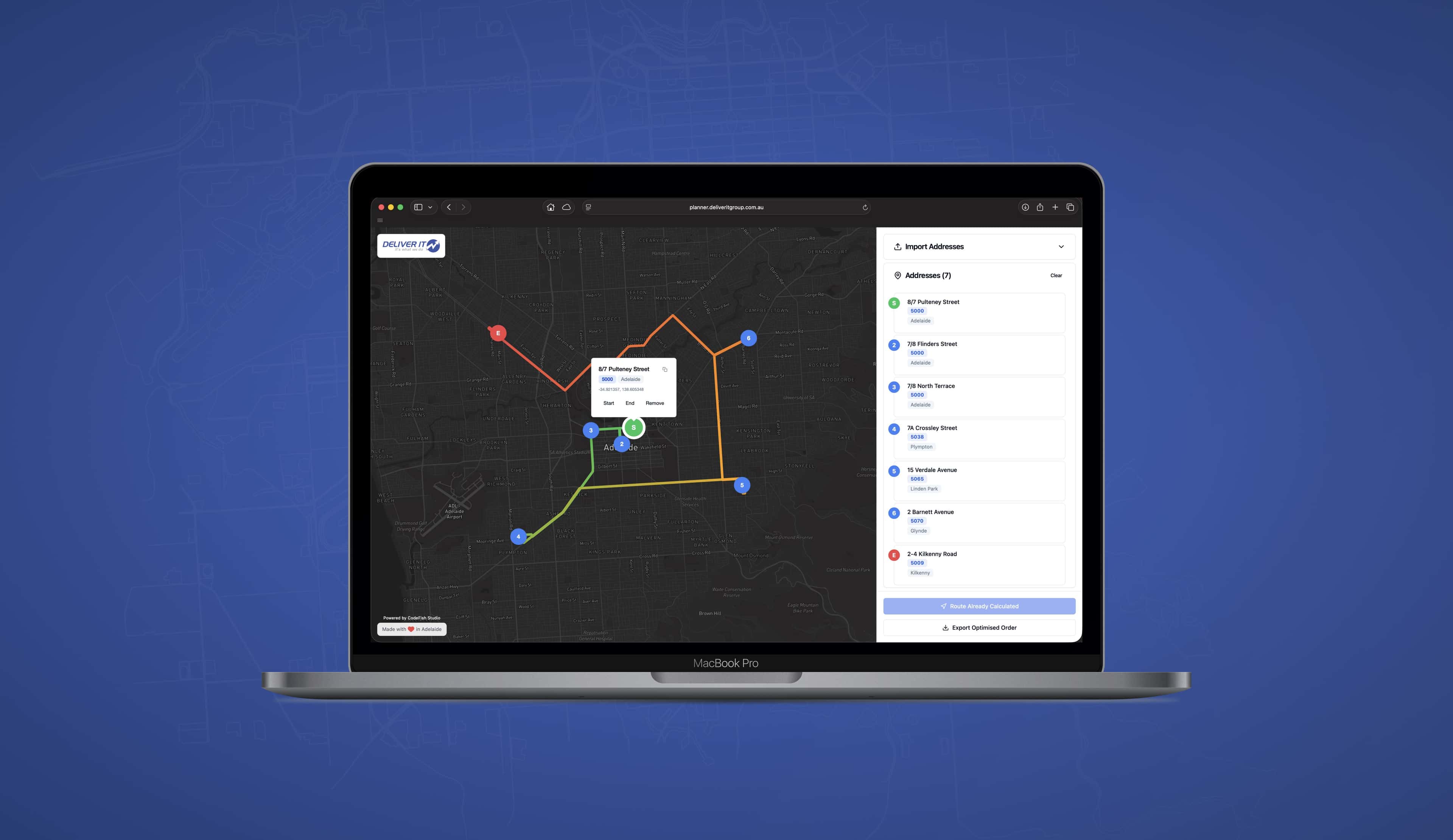
Plans change by the hour. We build the software that keeps your operation moving and shows your team what is happening right now.

Plans change by the hour in logistics, and the wrong tools turn every change into delays, errors, and cost.

See what is happening and adjust fast

When a plan shifts, your team needs to see it and act fast. We build tools that give them a clear picture and room to move:

  • One dashboard that shows the operation at a glance
  • Problems that surface early, before they become late loads
  • Real-time status where it counts, so nobody is chasing an update
  • Tools to re-plan quickly when the day does not go to plan
Joining up the systems you already run

Most logistics work sits between systems that do not talk to each other, so your people copy data across by hand and mistakes creep in. We join them up and smooth out the planning, the execution, and the messy exceptions in between. We work across:

  • Fleet and telematics platforms
  • Warehousing and inventory systems
  • ERPs and finance tools
  • Customer-facing tracking

Between your TMS, your WMS, and your customers

Australian logistics operators run on a stack that was never designed together: a TMS like MachShip or TransVirtual, a warehouse system like CartonCloud, Xero or MYOB for invoicing, and a customer who wants a tracking link. The gaps between those systems are where the hours go — re-keying consignments, chasing PODs, and answering "where is my freight" by phone. CodeFish builds across those gaps: pulling consignment and scan data into one place, automating the re-keying, and giving your customers a self-serve view so your team stops being the lookup service.

How logistics operators work with us

Every one of them starts with a Rapid Insight Workshop: a paid session that maps your operation and hands back a prioritised roadmap. What you do next depends on what it finds.

Apex

We stay embedded and work through the roadmap with you month after month, as lanes, customers and systems change. One monthly fee, measured against results we agree at the start. From $15K a month, six-month minimum term.

Amplify

One build, scoped in writing before anything starts, then quoted at a fixed price against that scope. A one-year warranty, and the code and the IP are yours. Typically $100K and up.

Ignite

Prove a tracking or dispatch tool on one lane. Fixed price, $25K to $50K, and working software in four to eight weeks — enough to test it with real users before you spend more.

Questions logistics operators ask us

With a Rapid Insight Workshop. It maps your operational picture end to end: the systems you run, where jobs stall, what the manual workarounds cost you, and which fix is worth the most. You get a prioritised roadmap back before committing to any build, so you know where to move first and what it is worth. From there you either test one idea first (Ignite), build one thing at a fixed price and own it outright (Amplify), or keep us on to work through the roadmap with you month after month (Apex). We will tell you honestly which one fits.

Yes, and this is usually the core of the work. Most logistics operations sit between a telematics or fleet platform, a warehousing or inventory system, an ERP or finance tool, and a customer-facing tracking experience. We connect those so planning, execution and exception handling run off one picture instead of four, and your team stops rekeying the same job into three systems.

Yes. We work in stages rather than big-bang replacements. We rebuild the process underneath, run changes through testing, and ship incrementally so dispatch keeps moving and you keep control of spend and risk. Legacy systems stay in place until the replacement is proven.

Compliance informs design decisions from day one rather than being bolted on at the end. Chain of responsibility obligations, driver and fatigue records, and audit trails are built into the workflow so the evidence is captured as work happens. When an audit comes, the record is already there.

That is the point of building it properly. Off-the-shelf tools assume the plan holds. We build for variability: clear operational dashboards, high visibility of exceptions the moment they appear, real-time status where it affects fulfilment, and planning tools nimble enough to reschedule without unpicking the whole day.

First working software typically lands in weeks, not quarters, focused on the single highest-cost friction point identified in the workshop. We prove value on one workstream before going broader, so you see a return before the scope grows.

Yes, and integration is usually the cheaper answer. These platforms are good at what they were built for, so our first move is to connect them — consignment data, scan events, rates and invoicing — rather than replace them. Where a platform no longer matches the business, building the missing pieces around it or replacing it are both on the table, and both are much larger conversations. Outgrowing CartonCloud walks through all three.

Yes, if the event that triggers the charge is captured where it happens. Waiting time, tail-lift, hand unload, re-delivery and after-hours charges are usually lost because the driver mentions them on the phone and nobody writes them down. We tie each charge to an event: a timestamp at the dock, a proof-of-delivery note, a failed-delivery scan. That event checks the customer's rate card and lands on the invoice run in Xero or your billing system for review. Your accounts team approves exceptions instead of chasing drivers. Where the WMS already records the event, we read it from there rather than adding another step.

The change is handled in one mapping layer, not across your whole system. Retailers and large shippers change EDI specs, ASN fields or API versions with little warning, and when the mapping is buried in your TMS, orders stop flowing until someone works out why. We put each customer's format in its own translation layer, with validation that rejects a bad file and alerts your customer service team before the trucks are loaded. A format change becomes a contained task, tested against sample files, rather than an outage during the morning booking window.

Yes, by not cutting over during peak. We plan go-live around your calendar, which for most carriers and 3PLs means avoiding the run from late October to Christmas and end-of-financial-year stock moves. New software runs alongside the old system first, on one depot, one customer or one lane, so your dispatchers can compare results before anything switches. Rollback is planned before go-live, not after a missed delivery. The person who knows the current system is involved early, so their knowledge is written into the new one rather than leaving with them.

Yes, and it is usually the fastest payback on the list. A customer-facing tracking view built off your existing scan data removes a large share of inbound calls, and it is a competitive difference when you are quoting against operators who cannot offer it.

Ready to build something great?

Local partners, global standards – full service design and development.