Outgrowing CartonCloud

CartonCloud is built around third-party logistics — storage and handling billed against somebody else's stock. Food and beverage operators who own what they move often end up working around it. There are three honest ways forward: keep it and connect it, keep it and build what it does not cover, or replace it. This page covers which one fits, what each costs, and how the work runs without stopping dispatch.

Why food and beverage operators start looking

CartonCloud is built for third-party logistics: storing and moving stock that belongs to someone else, and billing for the handling. If that is your business, it usually earns its place.

If you own the stock, with batches, expiry dates and allergen rules, the gaps get filled by hand and in spreadsheets. That is when people start looking.


Where it stops fitting

Six things we hear. One on its own is usually an integration job; three at once is the point where replacement starts to earn its keep.

You are not a 3PL

The model assumes you are holding someone else's stock and billing them for it. When you own what you move, you spend your time working around the parts that assume otherwise.

Batch and expiry need enforcing

Food work needs oldest stock out first on the pick, allergen separation that holds, and a batch number that survives from receipt through to the invoice. Recording it after the fact is not the same as stopping the wrong pallet leaving.

The bill grows faster than the business

Per-user and per-consignment pricing is fine until volume doubles. Worth doing the sum against what a build costs to run — sometimes it still favours staying, and you want to know which.

Every answer starts with an export

When margin per customer, cost to serve or yesterday's short-picks all live in a spreadsheet somebody rebuilds each week, the reporting has stopped being reporting.

The integrations nearly fit

Orders land, invoices go out, and somebody re-keys the bit in between. Near-enough integration is more expensive than none, because nobody budgets for the person patching it.

Customers want their own view

Stock on hand, order status, batch and expiry, without phoning your office. It is the fastest thing to win a tender on and the hardest to bolt onto a system built for someone else's workflow.

Three ways forward, and only one of them is a replacement

Most of the time you keep it. Connect it to fix double entry and reporting, which is the cheapest route and lands in weeks to a couple of months. Or build around it to cover batch, expiry, pricing and a customer portal.

Replace it only when the core no longer fits, such as running production too or pricing per customer. It is the largest route, and we won't push it to sell a bigger project.

CartonCloud got you off paper. Now the warehouse works around it, and the workarounds have quietly become the job.

What each route costs

One fixed starting point, then a cost set by the route you take.

Start with a $9,000 workshop

A fixed-price start. We follow an order from call to invoice on your floor. The roadmap is yours whether or not you build with us.

Connect it

The smallest cost and fastest payback, because the work is the joins between systems rather than the system itself.

Build around it

Priced by how many missing pieces you need and how much of the floor they touch.

Replace it

Driven by customer-specific rules, historical data and pricing. Defined scope is fixed-price as Amplify; a changing operation runs as Apex.

How the work runs

Map what it is really doing (1–2 weeks)

Every order type, every customer rule, every export somebody rebuilds by hand. The list of things happening outside the system is the scope, and it is always longer than the list inside it. This is also what decides which of the three routes you take.

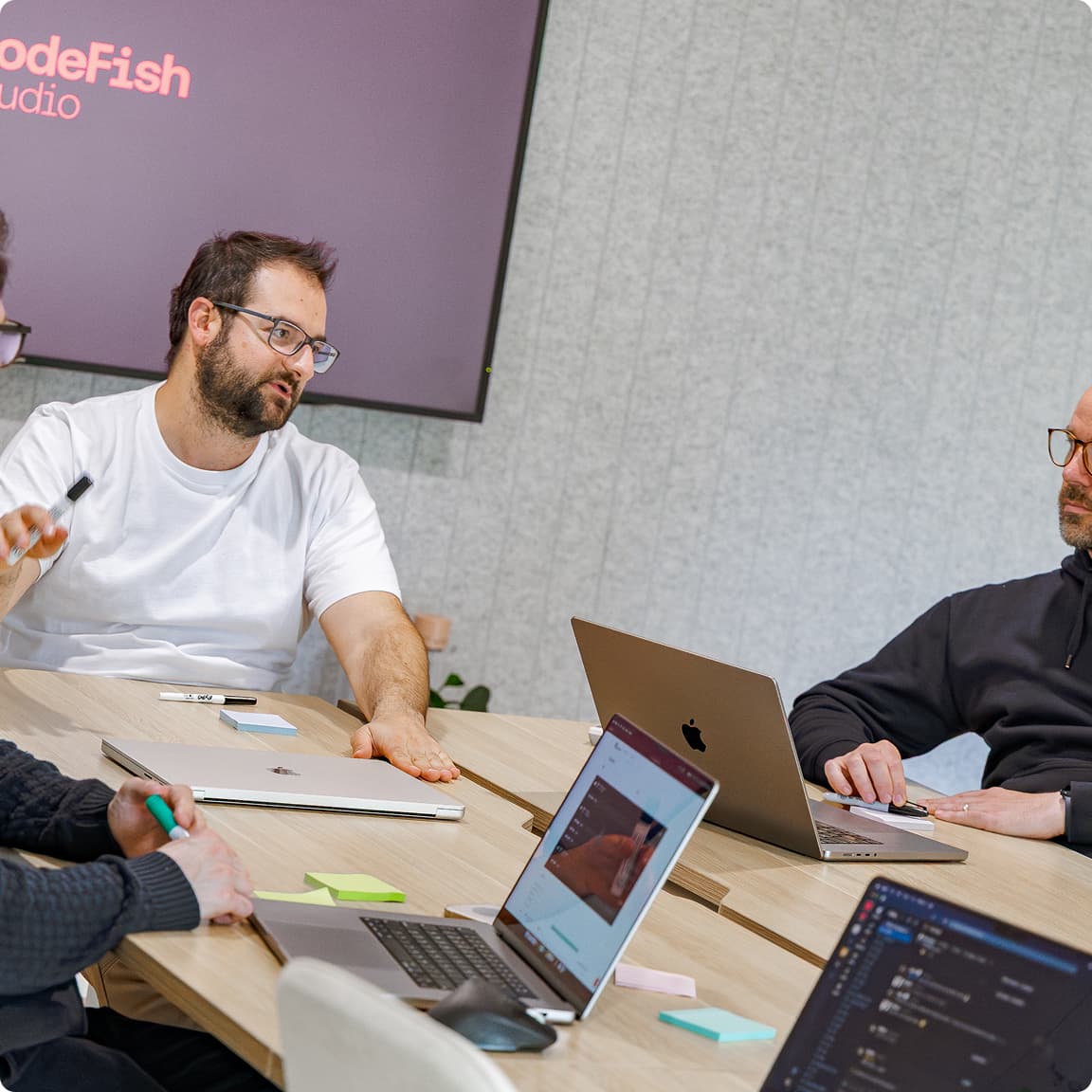
Two CodeFish team members in discussion across a meeting room table, one taking notes

Build alongside, on live data (4–8 weeks)

Whatever we build — an integration, a missing piece, or a replacement — runs against the same stock and the same rates as the system in use, and you compare the two outputs daily until they stop disagreeing. Nothing gets switched off to find out whether it works.

A CodeFish developer working across three monitors, reviewing code and version history

Switch on one customer at a time

Start with the customer whose rules are simplest, not the largest. Dispatch keeps moving, the team learns on low stakes, and you can stop at any point without a rollback.

Four CodeFish team members working through a problem around a table of laptops, CodeFish Studio sign on the wall

Questions we get asked about CartonCloud

Frequently, yes, and it is the first thing we test. If picking, dispatch and billing are working and the pain is reporting, double entry or customer visibility, connecting it costs a fraction of replacing it and lands sooner. We will tell you when that is the answer — the workshop is the same either way, and the roadmap is yours regardless of who builds it.

No, because we do not switch anything off to find out whether the new thing works. Whatever gets built runs alongside the existing system on the same data until the two agree, then customers move across one at a time starting with the simplest rules. If something is wrong you stop after one customer, not after the whole business has moved.

The workshop decides it, not a sales conversation. Roughly: if the system does the right things but nothing talks to it, connect it. If it does most of the right things but cannot enforce batch, expiry or your pricing, build those around it. If the model itself is wrong for your business, replace it. Most operators arrive assuming the third and leave with the first or second.

Yes, and it is the most common piece of work we do here. Orders and stock movements in, invoices and consignment data out, batch numbers carried through rather than retyped. The thing to settle early is which system is right when two disagree about stock, because that argument is guaranteed and it is a business decision rather than a technical one.

That is usually why we are called, and it can be done either around CartonCloud or in a replacement. Oldest stock out first enforced at the pick rather than recorded afterwards, allergen separation that blocks rather than warns, and a batch number that carries from goods-in to the invoice. The test is how long a full trace takes once a recall starts, and it should be minutes.

As much as you need, and the honest question is how much that is. Open orders, current stock, customers and rates always come. Five years of consignment history usually does not need to live in the new system — an archive you can search is cheaper and answers the same audit question. We decide this in the workshop, because it is the line most people under-budget.

Not as a first move. Picking, dispatch and rate calculation are well-solved problems and rebuilding them from scratch buys you nothing. What is worth building is the part nobody sells you: batch and expiry enforced on the pick, your pricing rules, your customer portal, and the joins between production, stock and invoicing.

They get rebuilt or re-pointed, and it is the part to plan first because your customers set the timeline, not you. We map every inbound order feed and outbound invoice before anything else, and run them in parallel through the change so a retailer never sees a gap.

Connecting it: weeks to a couple of months. Building the missing pieces around it: two to four months for the first one in use. A full replacement for a single site with a handful of customer-specific rules: three to six months from the workshop to the last customer moving across. Multiple sites, production as well as warehousing, or heavy EDI push that out, and we give you the range before you commit.

Ready to build something great?

Local partners, global standards – full service design and development.