Amplify: custom software at a fixed price

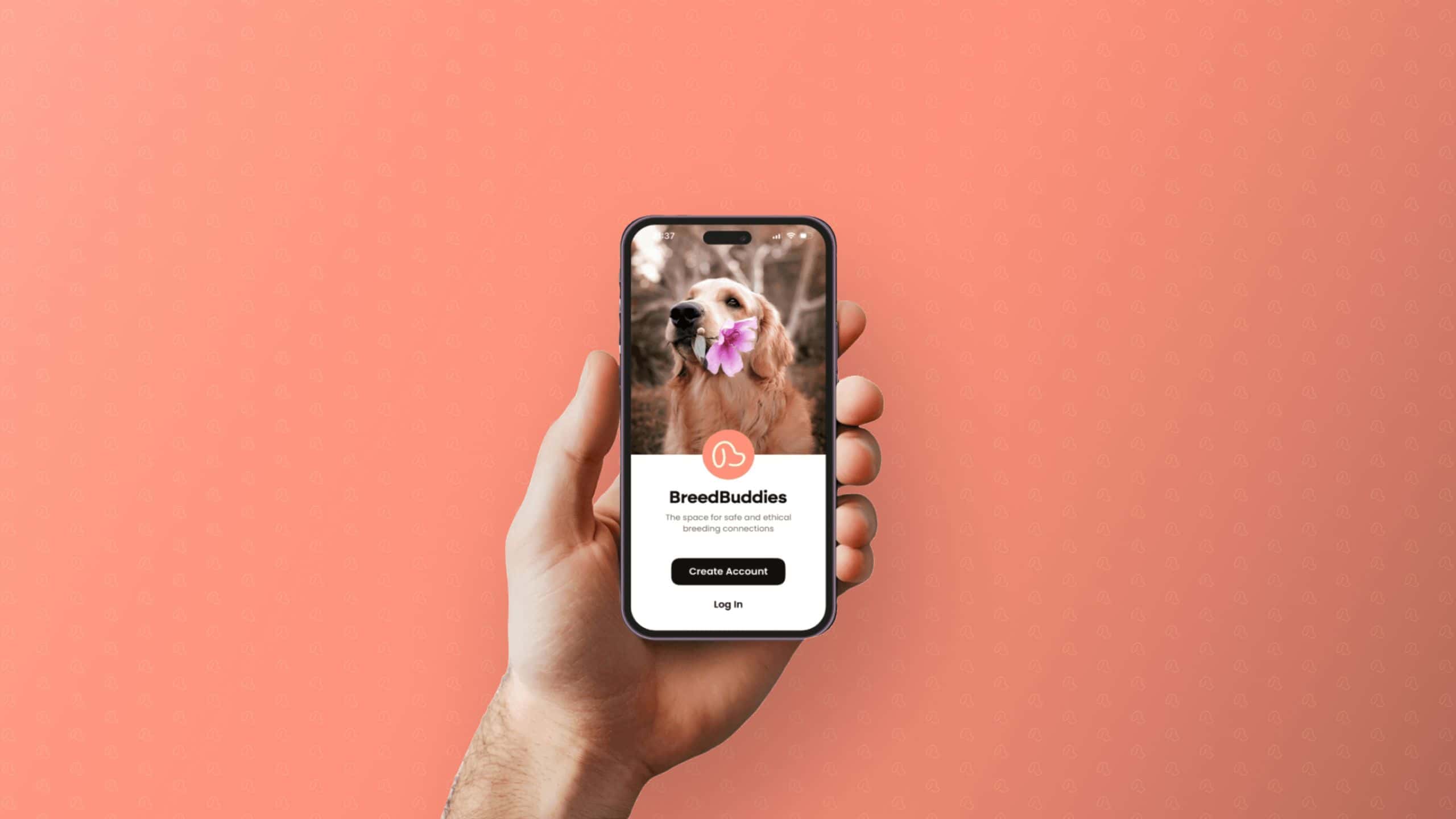
Custom software at a fixed price: internal platforms, customer apps, mobile. Scoped in writing first, one-year warranty, you own the code.

What an Amplify project costs

$100K+

Typical project range, scoped to a fixed price

12 months

Warranty included post-launch

100% yours

No lock-in, no licence fees

Fixed scope

Requirements document agreed before build begins

Two CodeFish team members in discussion across a meeting room table, one taking notes

A fixed price for any project size or complexity.

Smaller scope, clear direction

You arrive with an idea or an outline. We assess the scope internally, produce a focused requirements document, and quote directly from it. No paid workshop required. We move quickly.

Larger or complex scope

For engagements where the scope is complex or not yet defined, we recommend starting with a paid scoping workshop. From there we produce a comprehensive requirements document covering all 15 sections of the product brief, which forms the basis of the fixed-price quote. Nothing is committed to build until both sides agree on scope.
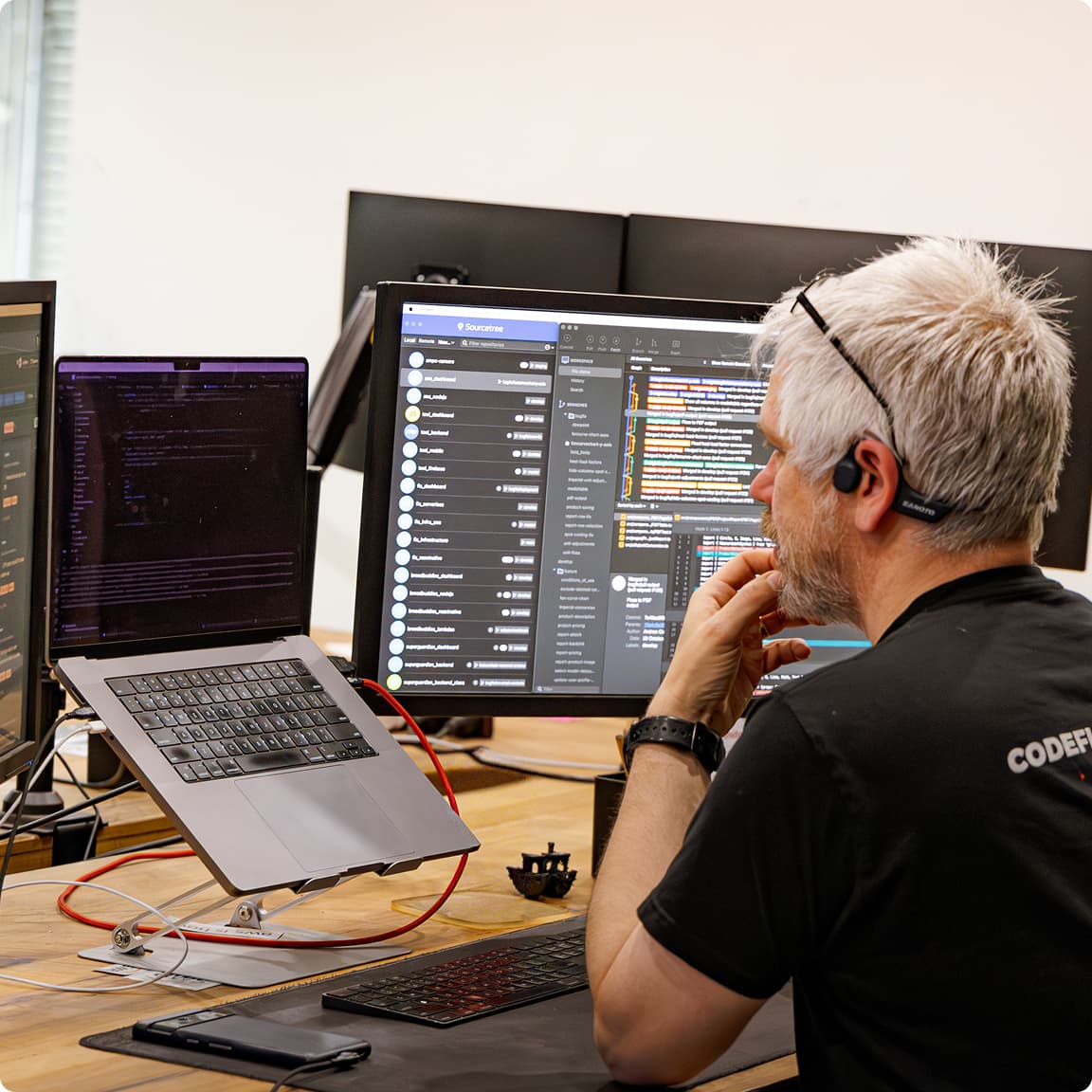
A CodeFish developer reviewing a project's commit history on screen

What we build

• Internal business platforms and operations tools
• Customer-facing web applications
• Mobile applications: iOS, Android, cross-platform
• API integrations and third-party platform connections
• Data dashboards and reporting systems

How an Amplify project runs

Scope and quote

We define the work together, agree on deliverables, and fix the price before anything starts. You know exactly what you are getting before a line of code is written.

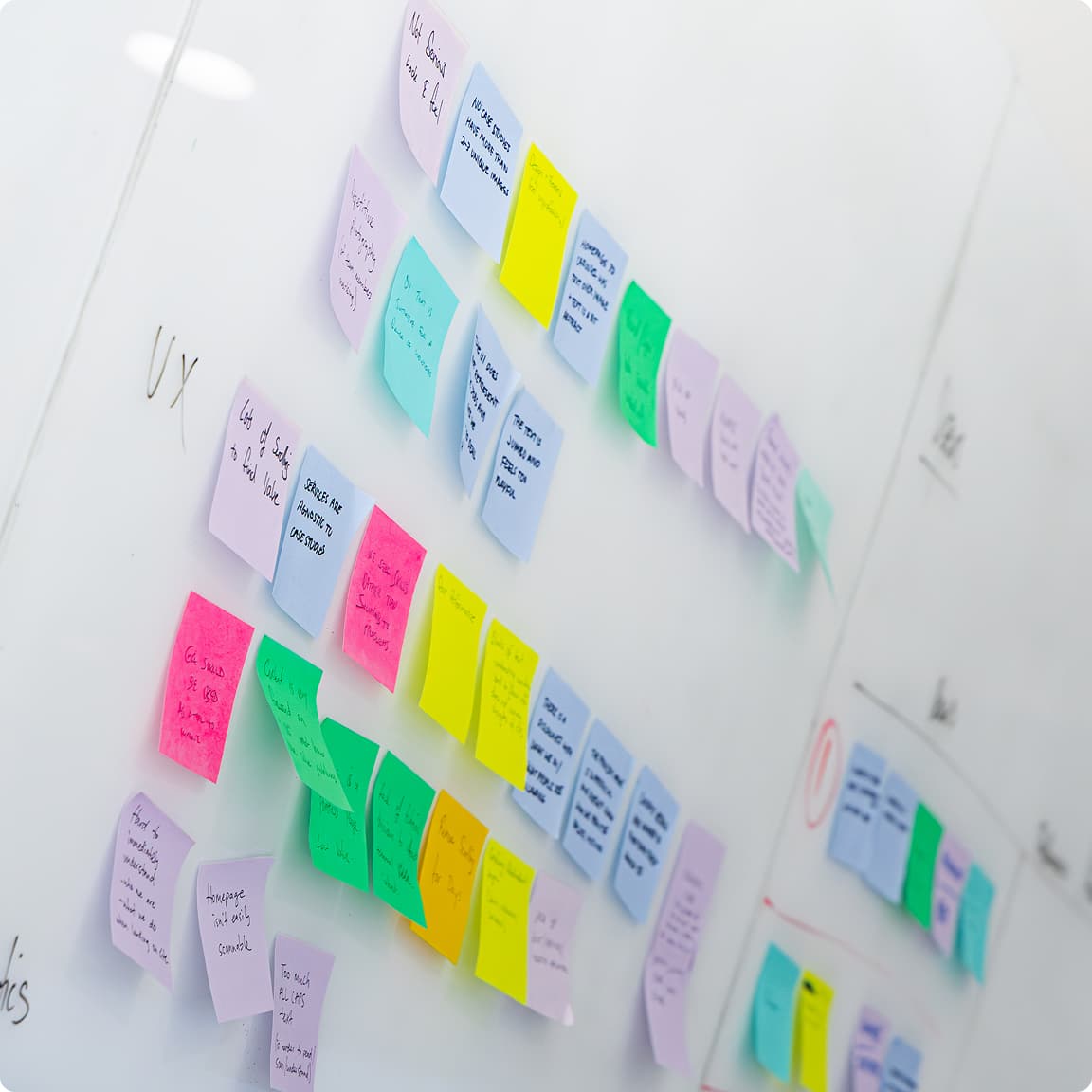
A whiteboard covered in colour-coded sticky notes from a UX workshop

Design and build

Development delivered in sprints with regular check-ins against the agreed requirements document. No surprises, no scope drift.

A designer sketching interface wireframes on paper beside a laptop

Handover and warranty

Clean delivery, full documentation, and a post-launch review to confirm outcomes were met. A one-year warranty is included. The code belongs to you outright.

The CodeFish Studio workspace in Adelaide, developers working at desks on the studio floor

Fixed price, fixed scope, and the code is yours at the end of the build.

What fixed price actually means

Three commitments, all of them checkable before you sign anything.

Fixed price means fixed price

Every engagement is quoted against a written brief before a line of code is written. If scope is agreed, the price does not move. Clients who need cost certainty, boards, finance teams, procurement, get it in writing.

Two scoping paths, same discipline

A focused requirements document for smaller, well-defined projects. A comprehensive requirements document for complex, high-investment engagements. Both exist to protect your budget and ours, and to ensure that what gets built is what was agreed.

A natural path to Apex

The best Amplify engagements do not end at handover. When the product is live and performing, the question becomes: what is next? That is where the Apex conversation starts.

Fixed-price and scope questions we get asked

If a product on the market does 80% of the job and the missing 20% is not where you compete, buy the product. Custom software earns its cost when the process is your advantage, or when no product fits the way you actually work. We would rather point you at the right tool than sell you a build you did not need.

Software makes an existing process faster and harder to change. If a workflow only exists because two systems were never joined up, or because nobody agreed who approves what, building it in code sets the mess in concrete. Fix or delete the process first; the build is usually smaller and cheaper afterwards.

A fixed price needs a fixed scope — that is the trade. If requirements are still moving because the business has not decided what it wants, no honest fixed quote exists, and any number you are given is padded for the risk. The cheaper path is a scoping engagement, or a prototype to settle the open questions first.

A properly scoped build does not compress past a point without something being given up, and what gets given up is usually testing. If the deadline is immovable and real, the honest options are a narrower first release, or a prototype now and the full build after — not the same scope promised faster.

We do not — that is what the scoping step is for. The price comes after a written requirements document covering functionality, technical approach and the boundaries of scope, not from a conversation. Anyone quoting a fixed price off a first meeting is either guessing or padding, and both cost you. The document is what makes the number honest, and you keep it either way.

Agreed scope is fixed at the agreed price. New scope is quoted as new scope, in writing, before it is built — so a change is a decision you make with a number in front of you rather than a surprise on an invoice. Being strict about that boundary is what lets us hold the original price at all.

Amplify projects typically start around $100,000 and scale with scope. The range is wide because it depends on how many systems the software has to talk to and how clean that data is — integration is usually the larger half of a build. Smaller, well-defined projects are scoped and quoted directly; complex ones go through a fuller requirements process first. You see the number before anything starts.

Defects in what we built, fixed at no cost for twelve months after launch. It covers the software not doing what the requirements document said it would. It is not a change window for new features, and it is not a hosting or support contract — those are scoped separately if you want them. The warranty exists because a fixed price means nothing if the thing breaks a month later.

You do, outright — the codebase, the repository, the IP. No licence fee, no ongoing dependency on us to keep it running, and it is documented well enough that another team could take it over. We would rather earn the next phase by being useful than by being the only ones who understand it.

Yes, and it is common. We work as a delivery partner alongside your team, as a specialist resource on the parts they do not want to own, or as the full build team — whichever fits. Your people know where the real constraints are, so the scoping work is better when they are in it.

Often, yes, and it is worth being clear-eyed about it. We review what exists first and tell you honestly whether it is worth continuing or cheaper to rebuild — sometimes the existing code is a solid foundation, sometimes finishing it costs more than starting again. Either way you get that assessment in writing, with the reasoning, before committing to anything.

When the scope is still moving. A fixed price is only honest against a fixed scope, so if the requirements are still being argued out, start with a Scoping Workshop and buy the build afterwards. Do not buy custom either when an off-the-shelf product genuinely covers the job — paying a monthly fee for something that already works beats owning a custom version of it. Custom earns its place when the process is specific to how you make money, when the tools you have force manual workarounds, or when your data has to move between systems that were never designed to talk.

A designer reviewing a website layout in Figma on a large monitor

Is Amplify the right fit for you?

You are building a product your business owns and sells to your customers — not bending a tool that was never made for the way you work.

You need the price and the scope settled before anything starts. No ambiguity, no scope creep, no invoice you did not see coming.

And you want to own it outright: the code, the IP, no vendor lock-in and no licence you cannot walk away from.

Why we work this way

A smiling team member wearing glasses and a turquoise linen shirt

Amplify is our refined project delivery process. It's 15 years in the trenches, building systems that don’t flinch in production. We design for reliability with cyber in mind from the start, and architect for scale so growth is part of the plan. If you're ready to start a project, chat to us about a Rapid Insight Workshop.

Sim PenzoCEO

Know what you need? Let us scope it.

Bring a brief or a general direction. We will tell you which path fits and what it will cost before you commit to anything.