
ERP integration connects the system that holds your orders, stock, costs and invoices to everything else that needs those numbers. CodeFish builds it for Australian mid-market businesses whose ERP is fine, but is surrounded by spreadsheets, exports and re-keying that only a few people understand. Instead of customising inside the ERP, we connect around it, so the ERP stays standard and upgradeable. The warehouse, the floor, sales and the board all work from the same figure, entered once.
ERP Integration
A heavily customised ERP is not an asset. It is a system you cannot leave.
Types of ERP integration
The connections that come up most often, roughly in the order they pay back.
ERP to CRM
Sales sees stock and pricing without asking, and finance sees the pipeline without a spreadsheet. See [CRM integration](/enterprise-integration/crm-integration).
ERP to the warehouse
Receipts, picks and dispatches in step with the ERP, so you stop selling stock you do not have. See [warehouse management](/enterprise-integration/wms-warehouse-management-system).
ERP to the floor
Work orders out, production and consumption back in, the same shift. See [manufacturing execution](/enterprise-integration/mes-manufacturing-execution-system).
ERP to field service
Jobs dispatched and closed on site, then invoiced out of the ERP without re-keying. See [field service management](/enterprise-integration/field-service-management-software).
ERP to maintenance and quality
Parts, costs and batch records landing in the ERP from the people doing the work. See [maintenance management](/enterprise-integration/cmms-maintenance-management) and [quality management](/enterprise-integration/qms-quality-management-system).
Planning and reporting
One agreed number for what you will sell and make, and reports operations can use. See [sales and operations planning](/enterprise-integration/sales-and-operations-planning).
What ERP integration has to do
Six jobs. Miss one and the project usually fails in the way listed against it.
Decide which system is right
When the ERP and the CRM disagree about a customer, one wins, agreed before anything is built. Every team then trusts the same number.
Check the way in
A documented API, a reporting database or a nightly file are different projects at different prices. Checked before quoting, so the quote is a number, not a guess.
Keep the ERP standard
Build alongside the ERP, not inside it. Vendor upgrades land without a rebuild, and you keep the option to change ERP later.
Run beside the manual step
Each connection runs alongside the old export until the two agree. Nobody loses a month end to a cut-over.
Fail loudly
Errors are logged and someone is told the same day. Problems get fixed before a stock count stops reconciling, not three weeks after.
Survive the upgrade
Every connection is tested against the vendor's upgrade before it lands. Upgrades become a routine week, not a crisis.
Should you customise the ERP or build alongside it?
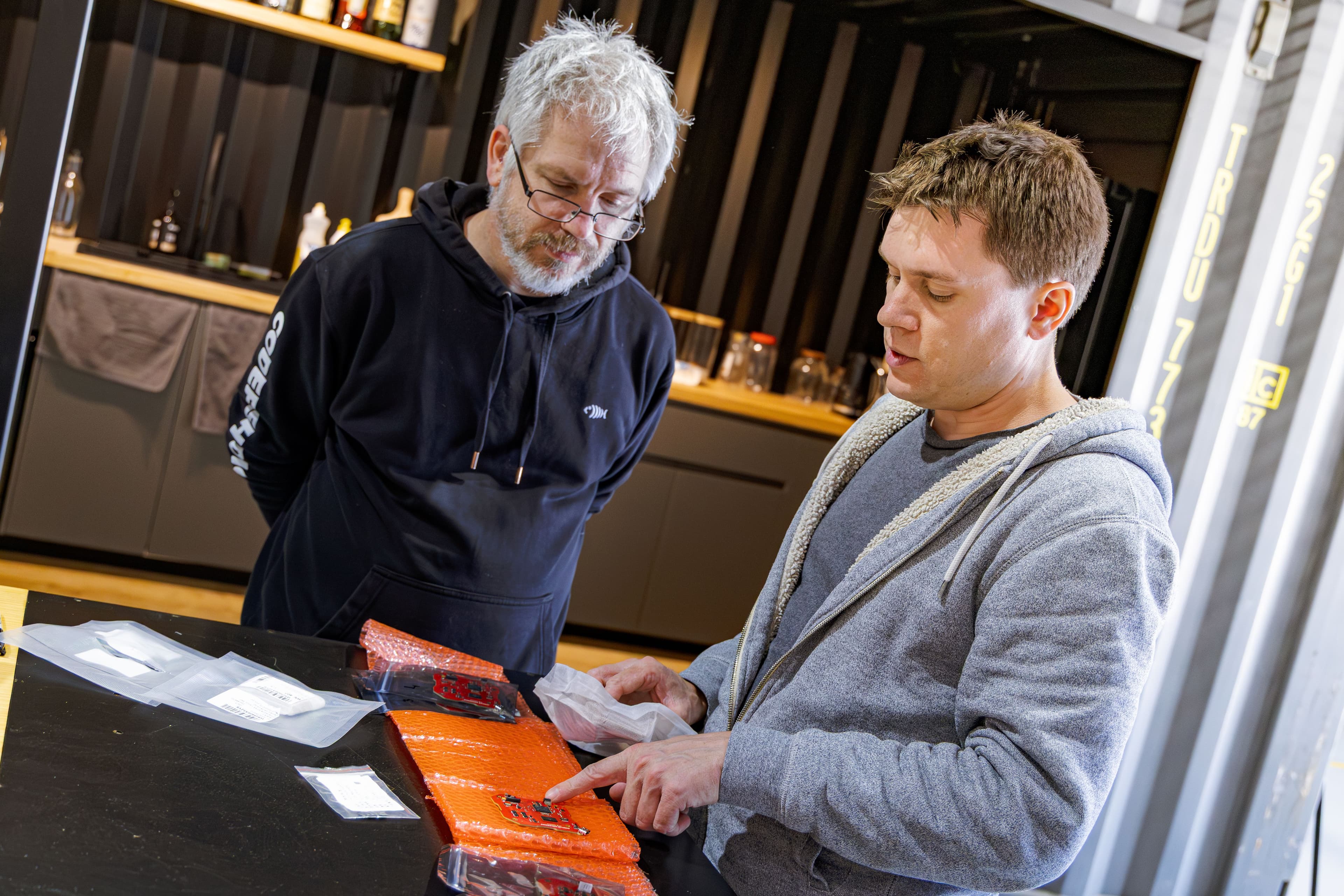
Configure inside. Build alongside.
Configure inside the ERP whenever it can do the job, and buy the vendor's standard module where one exists. Custom code inside the ERP is what breaks at the next upgrade, and the original quote rarely carries that cost. Build alongside it when the process is yours, the module costs too much, or the people who need the screen are not ERP users. The ERP stays the system of record either way, and you keep a system you can upgrade or leave.
What does ERP integration cost?
Every ERP project starts with a Rapid Insight Workshop at a fixed $9,000 + GST. CodeFish maps every export, re-key and workaround around your ERP, with the hours attached and an owner named. The roadmap says what to connect first and what to leave alone, and it is yours whether or not you build with us.
The price after that is set mostly by how your ERP lets you in. A documented API is a fraction of the work of a reporting database or a nightly file. A single connection is usually quoted fixed-price as an Amplify project, and is live three to six weeks after the workshop. Ongoing connections and upgrade testing run as an Apex partnership, so you know the first number before you commit to the rest.
How an ERP integration project runs
Find the exports (1–2 weeks)
Every export, re-key and workaround around the ERP, with the hours attached. Each one exists to route around something the ERP will not do, so this is the fastest way to find what is broken. You finish knowing which connection pays back first.

Build the first connection (3–6 weeks)
One connection, with the ERP as the system of record, error handling and a log. It runs alongside the manual export until the two agree, then the export stops and the hours come back.

Extend, and watch the upgrades
The next connection goes in once the first has held through a month end. Vendor upgrades are tested against every connection before they land, so they stop being a risk.
How we deliver ERP work

Web App Development
Web application development services for internal tools, customer portals and SaaS products. Built in Adelaide to a fixed price, with a one-year warranty.

Rapid Insight Workshop
We map how your business really runs — systems, costs, friction — and return a prioritised roadmap with a business case. $9,000 + GST, fixed.

Systems Integration
For operations businesses running five or more systems. We connect your ERP, CRM, warehouse and field systems so nobody retypes data, and keep them connected as a long-term partner.
ERP questions we get asked
Usually not. The ERP is rarely the problem; the spreadsheets and exports around it are. Connecting what sits around it is faster and cheaper than a replacement, and finance keeps the system it already trusts.
CodeFish does not answer that. We work with the ERP you have. If you are still choosing, an implementation partner for the shortlisted products is the right advice. Come back to us for everything that has to connect to it afterwards.
Sometimes yes. If it is a standard module they already ship, buying it is cheaper than building it. Be careful when the answer is custom development inside the ERP, because that is the work that makes every future upgrade expensive.
There is almost always a way in: a reporting database, a file drop or a scheduled export. It changes the size of the build and how upgrades are tested, so we check it in the workshop before anything is quoted.
It can, and that is the main ongoing risk. We build against documented APIs where they exist, because those are versioned and changed with notice. Where we reach in through a database, we say so up front, and under an Apex partnership upgrade testing is part of the work.
Some of them. A spreadsheet used for modelling and one-off analysis is fine. A spreadsheet that is the only record of something, or that has to be re-keyed into the ERP, is a system pretending to be a document, and those are the ones worth replacing.
ERP access, and a named person who can answer questions about the data. Getting API credentials from the ERP vendor is the step most likely to add time, so we start it on day one.
You do: code, configuration and documentation, handed over as standard. Nothing we build around your ERP locks you to us, and it should be readable by whoever picks it up next.