AI Readiness Assessment

Start with the free two-minute check — five questions, an honest read on where your business sits. Go deeper with a full assessment when you are ready to commit.

Where to start

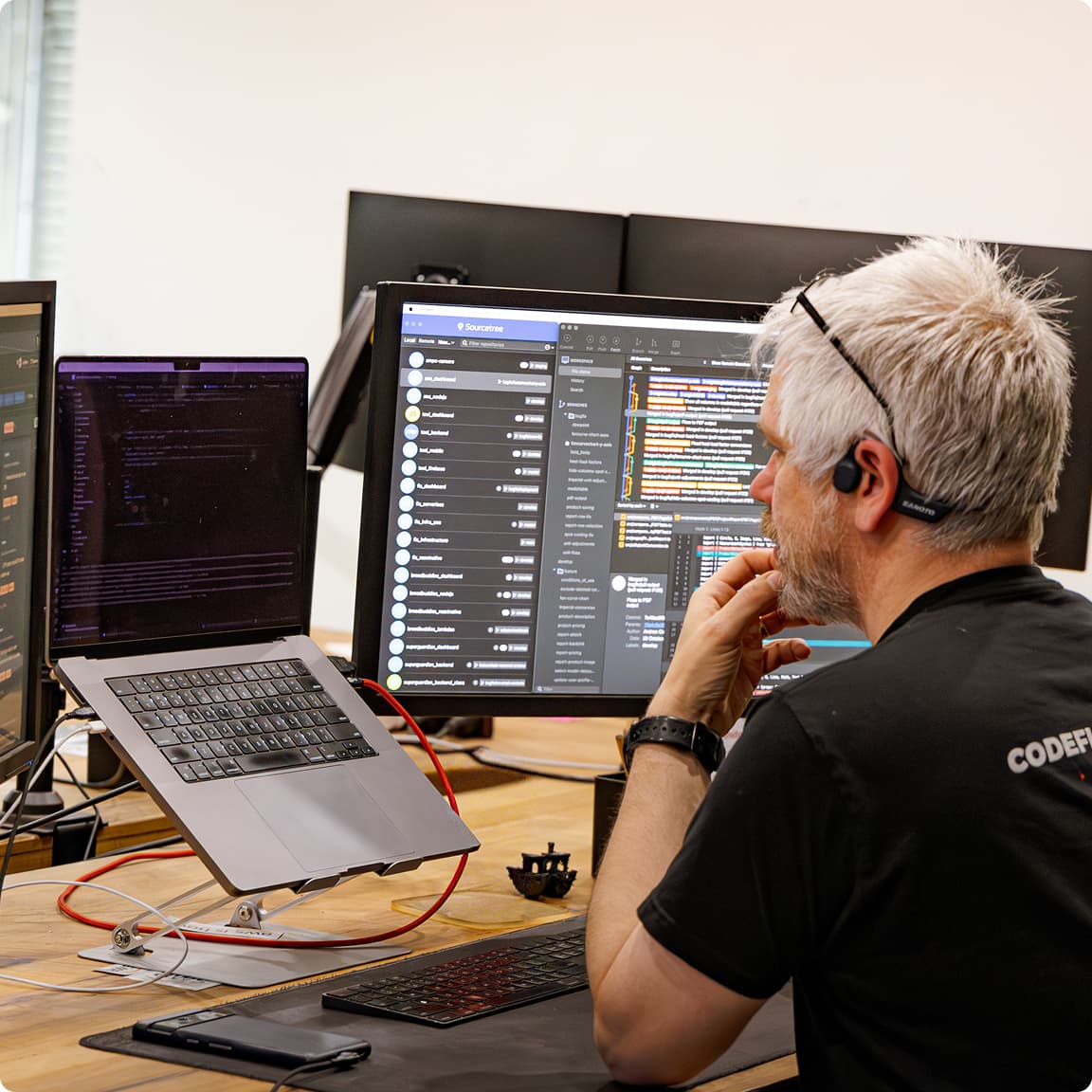
A CodeFish developer working across three monitors, reviewing code and version history

Two minutes will tell you whether AI is your next step or your next stall

Plenty of agencies will sell you an AI build on day one. We would rather tell you whether it will work first. AI acts on data and follows rules, so if your data is scattered across disconnected systems and your processes are undocumented, an AI project will stall at the pilot no matter how good the model is.

The quickest way to find out where you sit is the two-minute check. Five questions, no forms to fill in, and a straight read on whether AI is a next step for you or whether the foundation comes first.

The full assessment goes further on the same three things: the state of your data, the clarity of your processes, and the readiness of your systems to support AI acting on them. You come away knowing which use cases are worth pursuing, which are not yet viable, and what the path to readiness looks like if there is a gap.

What do we look at?

Data, process, systems — in that order, because each one depends on the last.

Your data

Where it lives, how much of it is connected, and whether an agent or automation could actually reach it. Fragmented data is the most common reason AI projects stall — so it is the first thing we look at.

Your processes

Which processes are documented, which live in people's heads, and where the rules are clear enough for software to follow. AI cannot follow rules nobody has written down.

Your systems

Whether your systems can support AI acting on your data safely — integrations, permissions, and the operational guardrails that keep an automated decision accountable.

How to tell a good AI use case from a bad one

A good AI use case passes five tests, and a job that fails any of them will disappoint you no matter how good the model is.

It happens often

Daily or weekly, not twice a year — the return comes from volume. If the task happens twice a month, the automation costs more than the hours it saves.

The rules can be written down

If three people each do it slightly differently and nobody can say which is right, that is a process problem, and AI will scale the confusion.

The outcome can be counted

Hours, dollars, error rates, turnaround time. If nobody can name the number, nobody will defend the system when budgets tighten.

A wrong answer is survivable

Either a person checks the exceptions, or the cost of being wrong is small. Where it is not, the job needs a tighter design and a human in the loop, not a faster model.

The data already exists in a system

If the information lives in someone's head or a spreadsheet on a desktop, connect it first. That is the foundation work most projects skip, and where we start.

How does the full assessment run?

Review data and systems

We look at where your data lives, how your systems connect, and what an AI agent or automation would actually be able to reach. This is the foundation everything else depends on.

A CodeFish developer reviewing a project's commit history on screen

Map candidate use cases

We work through where AI could take on real operational work in your business, and pressure-test each candidate against value and readiness. Not everything that could be automated should be.

CodeFish Studio team members in a workshop

Deliver a clear recommendation

A written recommendation: the use cases worth pursuing, the readiness gaps to close first, and a realistic path forward with effort and sequence. Something you can act on, not a hundred-page report.

Why do AI projects stall?

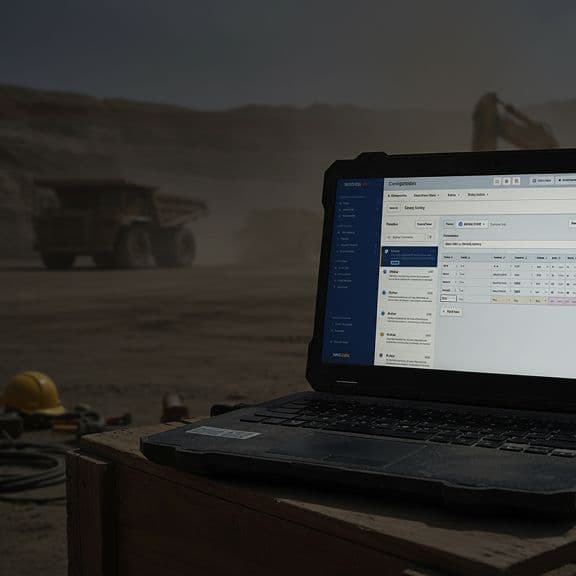
Rugged laptop on a crate at a mine site running fleet configuration software, with a haul truck behind

Why do most AI projects fail before they start?

AI projects stall for four reasons, and none of them are the model. The data sits in four systems that disagree with each other. Nobody ever wrote the rule down, because three people each do the job differently. The job picked was interesting rather than expensive. Or it shipped and nobody measured it, so nobody defended it when budgets tightened.

Sometimes the honest answer is not yet: fix the process first, then put AI on top of it. Two minutes will tell you which of the four is closest to you. If you already know the job you want AI to take on, a Rapid Insight Workshop maps it against your systems and prices the path.

What does an assessment look like in practice?

Say a wholesaler wants AI to answer order-status emails. The assessment finds status in the ERP, dispatch updates in a carrier portal and back-order notes in a spreadsheet, so an AI reading only the ERP would give wrong answers. Staff also quote delivery dates two ways.

The recommendation: connect the carrier feed, retire the spreadsheet, agree the delivery-date rule, then pilot on one product line with a person approving replies. You get the order, rough effort and what to measure.

Readiness assessment questions we get asked

Yes — take the two-minute check. Five questions on your data, your processes and the work your team repeats by hand, and you get an honest read at the end of it plus the sensible next move. It is free, there is nothing to book, and plenty of people stop there. The full assessment is for when you want the detail behind that answer before you spend on a build.

It is a short, fixed-scope engagement — a matter of weeks, not months, priced up front. You get a clear recommendation you can act on at the end of it, not an open-ended consulting retainer. We confirm the exact scope and cost before we start.

No. The assessment is honest input, not a sales funnel. The recommendation is yours to act on however you like — with us, with your own team, or not at all if the honest answer is 'not yet'. We would rather tell you the truth than sell you a build that stalls.

That is a valid and common outcome, and it is worth knowing before you spend on a build. Where there is a readiness gap, the recommendation lays out exactly what it takes to close it — usually getting your data connected and your processes defined, which an Apex engagement can put in place.

You do not need clean data to start, only access to the data you already have. We look at the systems your team works in every day, such as your accounting package, ERP, CRM or job system, plus the spreadsheets and inboxes that fill the gaps between them. Messy data is normal and is part of what the assessment measures. What helps is someone who can show us where each number comes from and who keys it in. If most of the information lives in people's heads, that is a finding too, and it tells you where to start before any AI work.

Fixing 'not ready' usually means connecting two or three systems and writing down a few rules, not a big programme. The common gaps are data split across systems that do not talk to each other, a spreadsheet doing a job a system should do, and a process each person runs their own way. Closing them might mean an integration between your ERP and CRM, retiring a shared spreadsheet, or a short session with your operations lead to agree how a job should be done. The recommendation sizes each gap so you can see the effort before you commit, and you can close them with your own team.

After the assessment you decide what to do with the recommendation, and there are usually three paths. If a use case is ready, you can build it, either with your own team or with us as a fixed-scope pilot. If there are gaps, you can close them first and come back to AI once the data is joined up. If the honest answer is that AI does not pay yet, you keep the report and spend the money elsewhere. Either way, you walk out knowing which job to start with, what it needs and what to measure once it is running.

A strategy deck tells you AI is important. This tells you, specifically, which jobs in your business AI can take on, which it cannot yet, and what stands in the way. It is grounded in the actual state of your data and systems, not in generic trends.

Whoever owns the operations and the data — usually an operations lead and someone who understands the systems. We keep the time demand light: a couple of working sessions and access to see how information actually flows, not a committee.

Yes. The report, the roadmap, and everything in it are yours to keep and to act on, with us or with anyone else. There is no obligation to build with CodeFish afterwards, and the assessment is written so another team could pick it up and act on it.

The cheapest AI project is the one you do not start on a broken foundation.