CTO as a Service

A fractional CTO — a senior technology leader part-time, owning your roadmap, managing your developers, and making the calls that cost real money when they go wrong.

What does a fractional CTO actually do?

A fractional CTO is a senior technology leader working with your business part-time who owns the technology direction rather than advising on it. CodeFish provides this to Australian mid-market businesses that have developers but nobody senior enough to set the direction, review the work, or say no to a vendor.

The difference from a consultant is ownership. A consultant hands you a recommendation and leaves. A fractional CTO makes the decision, sits at the leadership table, manages the team that has to live with it, and is still there in six months when the consequences arrive.

The work covers four things: the technology roadmap, the structure and standards of the engineering team, build-versus-buy and vendor decisions, and translating technology risk into terms the rest of the leadership team can act on. CodeFish delivers all four inside an Apex partnership, so the person setting the direction is accountable for what gets built as well.

What does technology leadership cover?

Technology leadership

Fractional CTO-level leadership embedded in your business. We own the technology direction, represent technology at the leadership table, and make the strategic decisions your business needs a senior technologist to make.

Engineering oversight

Code quality, team structure, delivery processes, and technical standards - reviewed and maintained by someone who has run engineering teams. We manage your developers, set the bar, and keep delivery on track.

Vendor and partner management

We own your technology vendor relationships, manage procurement decisions, and evaluate tools and partners on your behalf. No more relying on vendor sales pitches to make decisions that affect your architecture.

What does a month look like?

A typical month has a rhythm your team can plan around. Each week there is a short session with your developers to review what shipped, unblock what is stuck and check the work against the standards agreed at the start. Each month there is a leadership meeting where the roadmap is reviewed, decisions are made and written down, and anything that needs the CEO or the board is raised in plain terms.

Between those, the work follows whatever is live. A vendor renewal gets read before it is signed. A build-versus-buy question gets an answer with the cost of each path beside it. A delivery that is slipping gets looked at the same week, not at the next review.

You also get a single written log of every technology decision made that month, what it cost and why it was made, so the reasoning survives staff changes and nobody has to rely on memory.

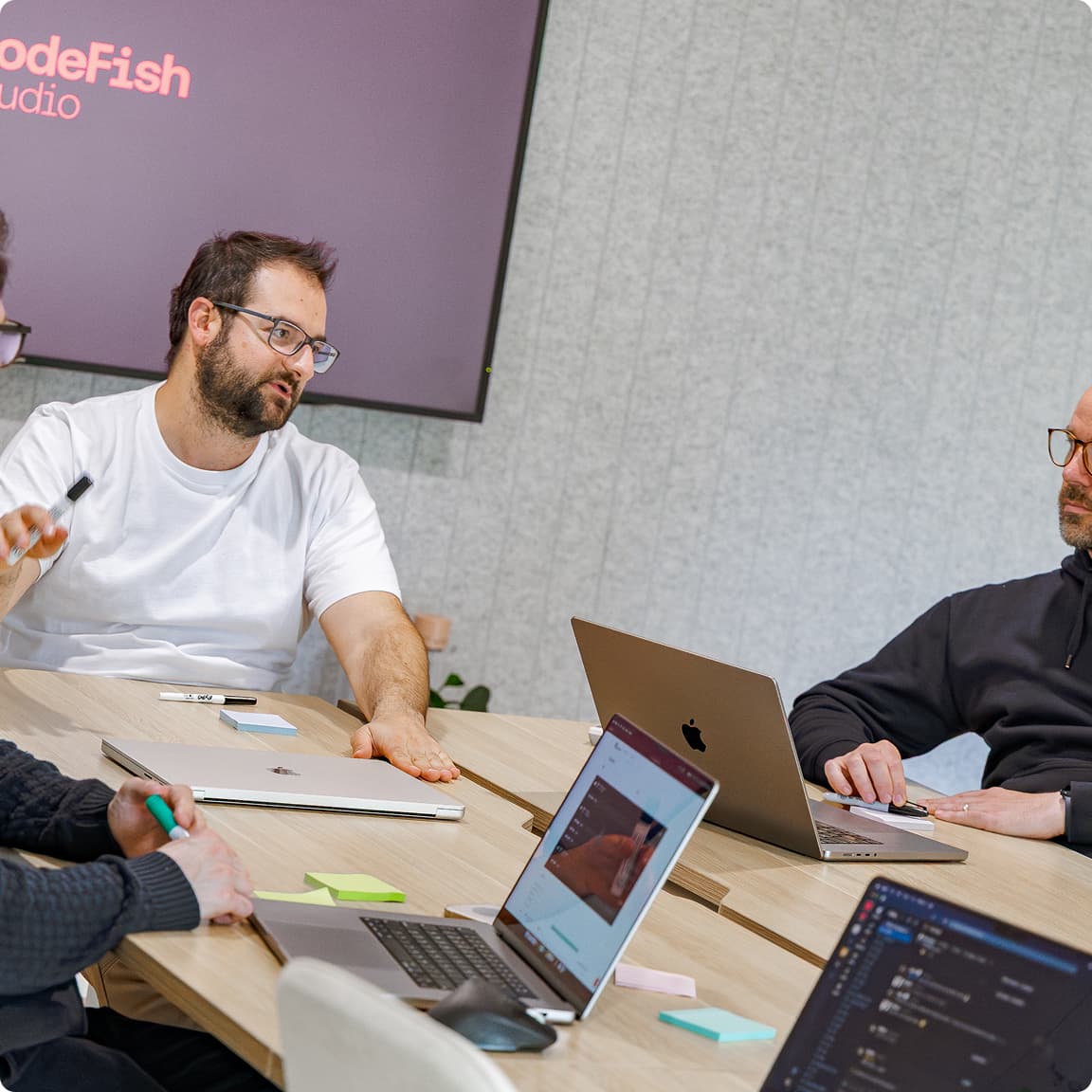
Four CodeFish team members working through a problem around a table of laptops, CodeFish Studio sign on the wall

The technology decisions you are making today will shape what you can build tomorrow

Most businesses at the growth stage are making technology decisions without the experience to know which ones will cost them later. Architecture choices, vendor commitments, team structure, and build versus buy decisions all compound over time. Getting them right requires someone who has made them before.

A fractional CTO gives you that experience on a part-time basis - embedded enough to understand your business, senior enough to give you the same quality of thinking you would get from a full-time hire at a fraction of the cost.

A fractional CTO makes the decision and is still there when the consequences arrive.

A whiteboard covered in colour-coded sticky notes from a UX workshop

How does this lead into Apex?

Technology leadership is one layer of Apex. The roadmap, team structure, and vendor decisions made here only pay off when someone builds against them — which is why Apex covers the leadership, the delivery, and the systems underneath on a six-month minimum term, measured against outcomes agreed at the start.

Fractional CTO questions we get asked

Yes — they are two names for the same arrangement, and the industry uses them interchangeably. "Fractional CTO" describes the person: a senior technology leader working with you part-time. "CTO as a Service" describes how it is bought: an ongoing engagement with a firm rather than a contract with an individual. The practical difference is what sits behind the person. Hire a fractional CTO directly and you get one person's time. CodeFish delivers the same leadership inside an Apex partnership, so the roadmap comes with the team that builds it and the engagement does not stop when one person is on leave.

A fractional CTO is a senior technology leader who works with your business part-time and owns the technology decisions rather than advising on them: the roadmap, the engineering team, the architecture, and the vendor commitments. It suits a business with real technology risk but not enough of it to fill a full-time executive role — usually somewhere between ten and a hundred staff, with developers already on the payroll.

Four signals, and one is usually enough. Your developers are shipping but nobody is deciding what they build. A vendor or platform decision is coming that would be expensive to reverse. Delivery keeps slipping and no one senior can say why. Or the board is asking technology questions the leadership team cannot answer. If none of those are true yet, you probably do not need one, and we will say so.

An IT manager keeps the systems you already run working. A fractional CTO decides what you should be building and holds the engineering standard. A full-time CTO does the same but is worth it once technology is the product rather than a support function, or once the team is big enough to need daily leadership. Most businesses hit the fractional stage years before the full-time one, and paying full-time rates too early is a common and expensive mistake.

Technology leadership is delivered inside an Apex partnership rather than sold as a standalone retainer, so the cost question is an Apex question: one monthly fee covering the leadership, the delivery, and the systems, priced against the outcomes agreed at the start. The reason is that leadership on its own rarely fixes what a business is actually paying for — the roadmap only pays off when someone builds it. A Rapid Insight Workshop at a fixed $9,000 + GST maps the work and produces the number before you commit to anything.

Apex runs on a six-month minimum term. That is roughly when technology leadership starts to show up in the numbers rather than in a plan. The first ninety days are the heaviest: understanding the business, auditing what exists, and setting the roadmap and standards. After that the load shifts from decisions to delivery.

The first 90 days are about understanding what you have before changing it. In the first month we meet the leadership team and the developers, read the code, review the systems and contracts you run, and list the decisions that are waiting on someone. In the second month that becomes a written roadmap and a set of engineering standards, agreed with you and the team. In the third month the first changes go in: a delivery rhythm, a fix to the riskiest problem, and any vendor decision that cannot wait. By day 90 you should know what is being built, why, and in what order.

In writing, in plain terms, at whatever rhythm your board already meets. A board report covers three things: progress against the roadmap and the outcomes agreed at the start, the technology risks that matter and what is being done about each, and any decision the board needs to make, with the cost and the options beside it. We can attend board meetings to present it and answer questions, or brief your CEO to do it. The aim is that directors understand where the money is going and what could go wrong, without needing to read code or learn the jargon.

Yes, and in most cases that is the entire point. You have developers but nobody senior enough to set technical direction, review their output, or make architecture decisions with authority. We slot in above the team and give them the leadership they need to do their best work, rather than replacing anyone.

We help you get there. A fractional engagement often runs until the business is ready to justify a full-time hire, and we can define the role, assess candidates, and make sure the person you hire inherits a well-structured technology function rather than a mess. Handing over cleanly is part of the job.

CTO as a Service is the leadership layer of Apex, not a separate product. Apex is the embedded partnership — leadership, delivery, and the systems underneath, run against outcomes agreed at the start, on a six-month minimum term. Buying the leadership on its own leaves you with a roadmap and nobody to build it, which is the failure mode we see most often when a business hires a fractional CTO in isolation. If technology leadership is genuinely all you need right now, we will say so rather than sell you the partnership.

You do. The roadmap, the architecture decisions, the documentation, and any code written during the engagement are yours, and they are written down rather than held in one person's head. The test of a good fractional CTO engagement is that your business is more capable without them at the end, not less.

Yes, and for most businesses at this stage that is a large part of the value. Technology risk is usually the thing the board asks about that nobody in the room can answer. The work covers where your data lives and who can reach it, what your contracts and insurers already require of you, which standards are worth pursuing and which are theatre for a business your size, and what to do first. You get the decisions written down and prioritised, in terms the rest of the leadership team can act on.

Who we work with

TP Records
Department of Primary Industries (PIRSA)
JKSM
Energy Logistix
REDARC
MAXMINE
SAHMRI
Seeley
CSIRO