
A manufacturing execution system (MES) records what happens on the production floor as it happens: which order is running, how much was made or scrapped, and why the line stopped. CodeFish builds and connects it for Australian manufacturers still running the floor on paper sheets and a spreadsheet typed up the next morning. Unlike the ERP, which plans and accounts in days and orders, the MES runs and records in minutes and units. You see the shift while you can still change it, and the ERP gets real output the same day.
Manufacturing Execution Systems
Your plan says what should be happening on the floor. Only the floor knows what is.
Types of manufacturing software
Most manufacturers already run two or three of these. The MES is where the floor's numbers come from.
MES
Production capture, downtime and traceability at the line. You run the shift on what is happening, not on yesterday's sheet.
ERP
Orders, stock and cost. The MES feeds it real output. See [ERP integration](/enterprise-integration/erp-integration).
Production scheduling
What runs next, on which machine, against real capacity. See [production scheduling](/business-automation/production-scheduling-software).
Quality management
Checks and non-conformances captured at the point of work. See [quality management](/enterprise-integration/qms-quality-management-system).
Maintenance management
Run hours from the floor drive servicing. See [maintenance management](/enterprise-integration/cmms-maintenance-management).
Food traceability
Batch in, batch out, a full trace in minutes. See [food traceability](/business-automation/food-traceability-software).
What an MES has to do
Ordered by what a floor gets value from first. Most businesses do not need all of it, and starting with all of it is why these projects stall.
What is running now
Which order is on which line, how far through it is, and whether it is ahead or behind. The morning meeting fixes today, not yesterday.
Capturing production
Quantities made, scrapped and reworked, recorded at the line by the person doing the work. No transcribing, so the numbers you report are the numbers that happened.
Downtime and its reasons
When the line stopped and why, in categories the floor agrees with. You know which problem to fix first, not just that you have one.
Traceability
Which batch of raw material went into which finished pallet. A recall becomes targeted instead of total.
OEE and real performance
Availability, performance and quality as a measured number once the capture is trusted. Improvement targets the board believes.
Capture that works on the floor
Screens for gloves, wash-down areas and freezers, with counts from machines where they can report them. Operators use it, so the data is there.
Should we buy an MES or build one?
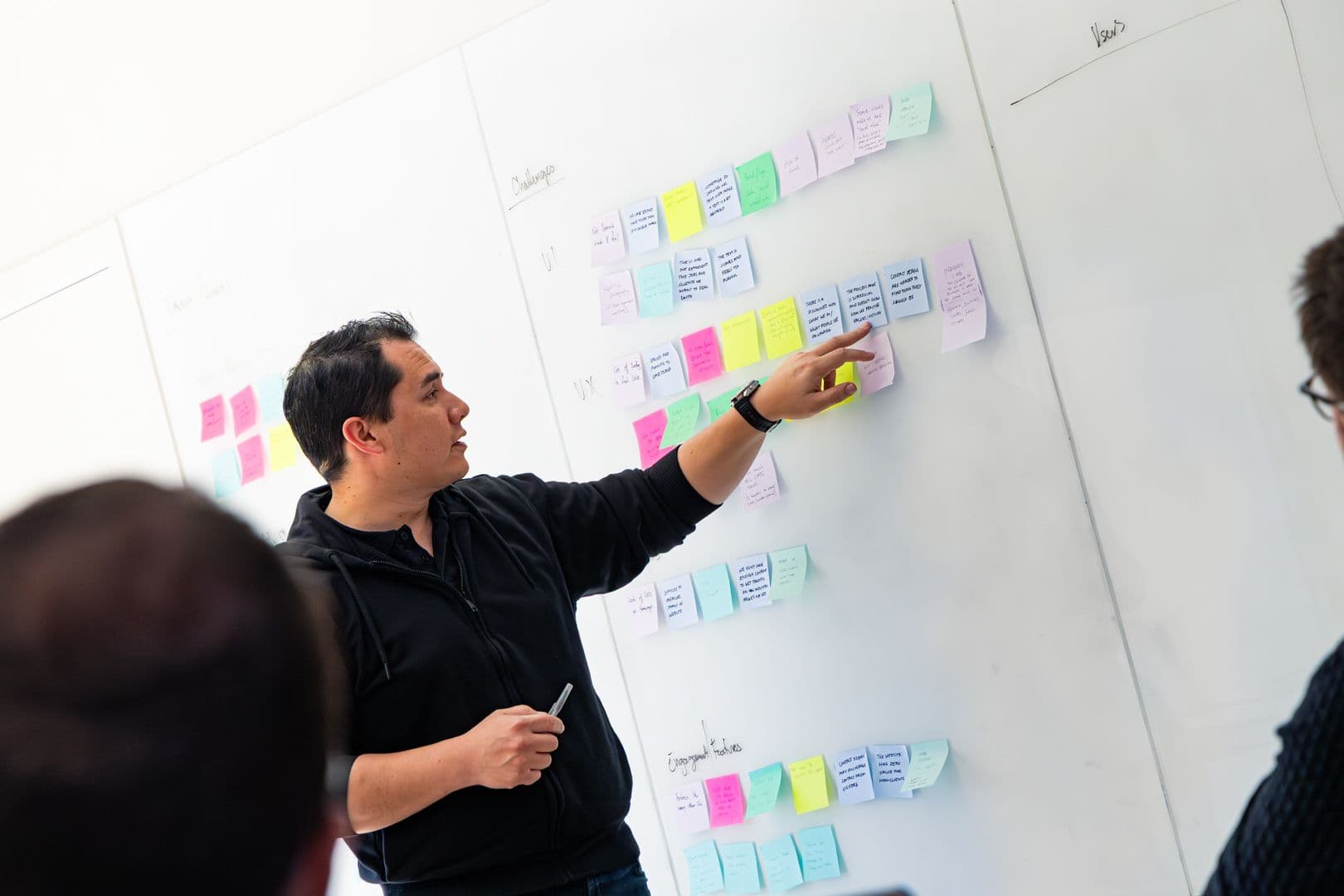
Buy the platform for a big plant. Build the three things you need.
Buy a platform if you run a large, complex plant with regulatory needs vendors have already solved, and you can carry a heavy implementation. Build when you need three of the twenty things an MES does: production capture, downtime reasons and traceability on tablets, linked to the ERP. If every vendor demo ends in customisation, that is the build. Either way, you pay only for the part of the floor that needs it.
What does an MES cost?
Every MES project starts the same way: a Rapid Insight Workshop at a fixed $9,000 + GST. CodeFish watches a shift end to end, follows the paper and records the workarounds. The roadmap shows which line to instrument first and what to connect to the ERP, and it is yours whether or not you build with us.
What comes next depends on what your machines can report. A line with modern controls that output counts is straightforward to connect. Older lines need an operator tablet or a retrofitted sensor, and operator entry often wins because it captures why the line stopped. A defined build is fixed-price as an Amplify project, and instrumenting the floor line by line runs as an Apex partnership, so you only pay for lines that prove their worth.
How an MES project runs
Stand on the floor (1–2 weeks)
A shift watched end to end, with the paper collected and the workarounds recorded. Supervisors always know where the data is wrong, so the workshop is largely about asking them. You finish knowing which line to start on.

Instrument one line (4–8 weeks)
One line, capturing production and downtime, with the screen designed for gloves and a wash-down. It runs beside the paper until the numbers agree, then the paper stops.

Prove it, then extend
The second line goes in once the first has held for a month and the floor trusts the numbers. Trust is the constraint, not technology. Each new line starts with data people already believe.

How we deliver MES work

Web App Development
Web application development services for internal tools, customer portals and SaaS products. Built in Adelaide to a fixed price, with a one-year warranty.

Rapid Insight Workshop
We map how your business really runs — systems, costs, friction — and return a prioritised roadmap with a business case. $9,000 + GST, fixed.

Systems Integration
For operations businesses running five or more systems. We connect your ERP, CRM, warehouse and field systems so nobody retypes data, and keep them connected as a long-term partner.
MES questions we get asked
The ERP plans and accounts: what to make, what it cost, what to invoice. The MES executes and records: what is running right now, how much came off the line, why it stopped. They have to be connected, but asking one to do the other's job is how you end up with an ERP nobody on the floor will touch.
No. The ERP keeps the orders, stock and costs, and the finance team rarely wants to change it. The MES sits beside it and sends confirmed output, scrap and material use through an integration rather than a replacement.
Yes, and this is the usual situation. Most of the value comes from capture at the line: an operator entering a count and a downtime reason on a tablet gives you something a sensor cannot, which is why the line stopped. Sensors can be retrofitted later where the count matters more than the reason.
Only if it is faster than the paper it replaces. That means large targets, few fields and no login typed with gloves on. We design the capture screen with the operators before building it, and if a step takes longer than writing it down, it gets removed.
Capture keeps working and syncs when the connection returns. That is decided at the start, not added later, because freezers, wash-down areas and steel buildings are hard on wi-fi. A line that stops recording when the network blinks gets filled in from memory.
Eventually, not first. OEE is a calculation on top of capture, and calculating it from data the floor does not trust produces an argument rather than an improvement. Get production and downtime capture right, then turn on OEE once nobody disputes the inputs.
Every batch of raw material gets an identity when it arrives, and each capture step records which identity went into which output. Done properly, you can answer 'which customers received product containing this batch' in minutes. Done on paper, that answer takes days you do not have during a recall.
Four to eight weeks after the workshop for one line, assuming ERP access and floor time for the design sessions. We start with one line deliberately, because a plant-wide rollout before anything has been proven is the most reliable way to make an MES project fail.
You do: the code, the data and the documentation. Production and batch records back your audits, recalls and customer claims, so they need to outlive both the software and whoever built it.