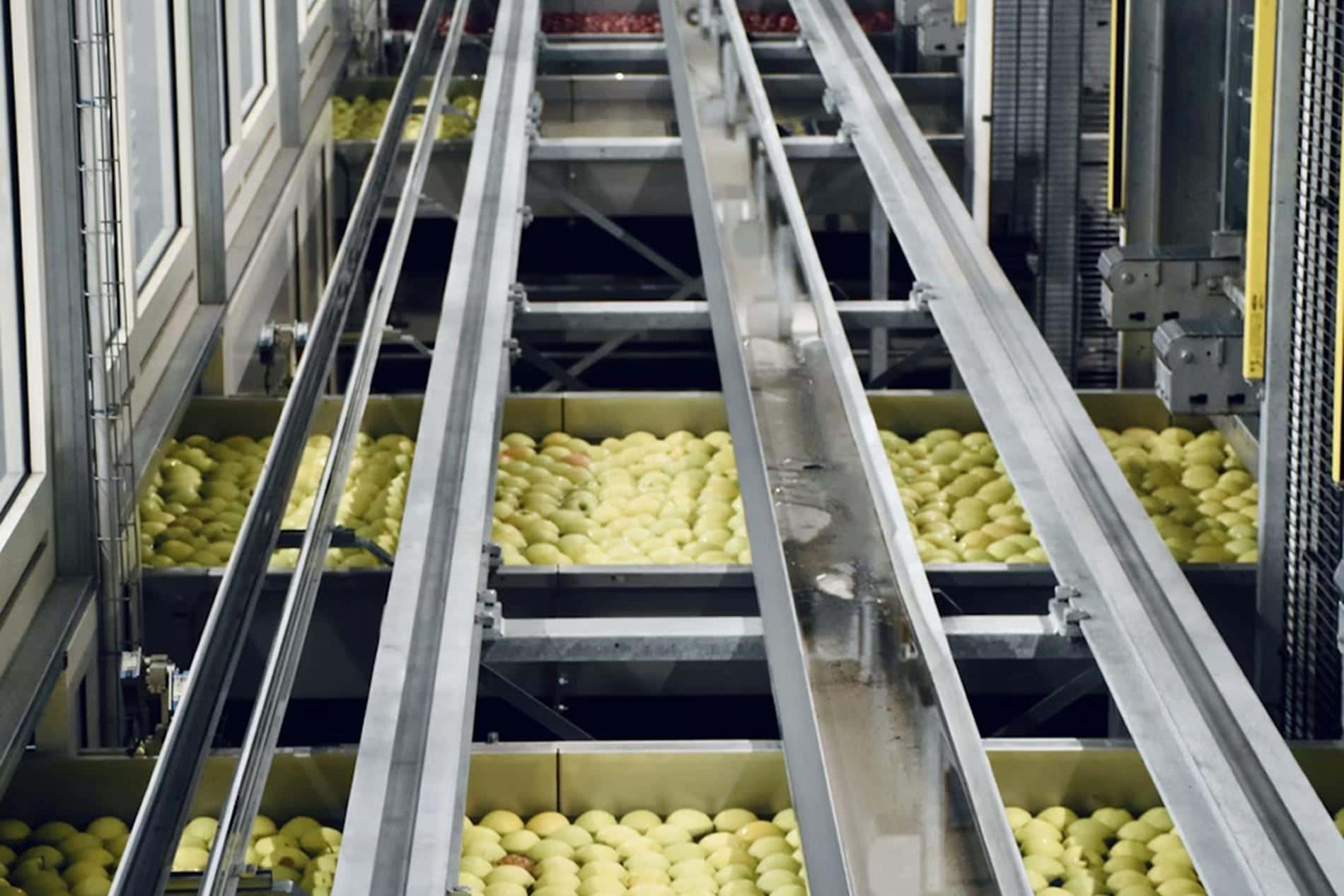

Walk any food production floor at 2pm and look at the clipboard by the cooler. Odds are the temperature checks for the whole shift are filled in, in the same pen, with the same handwriting, at the same time.
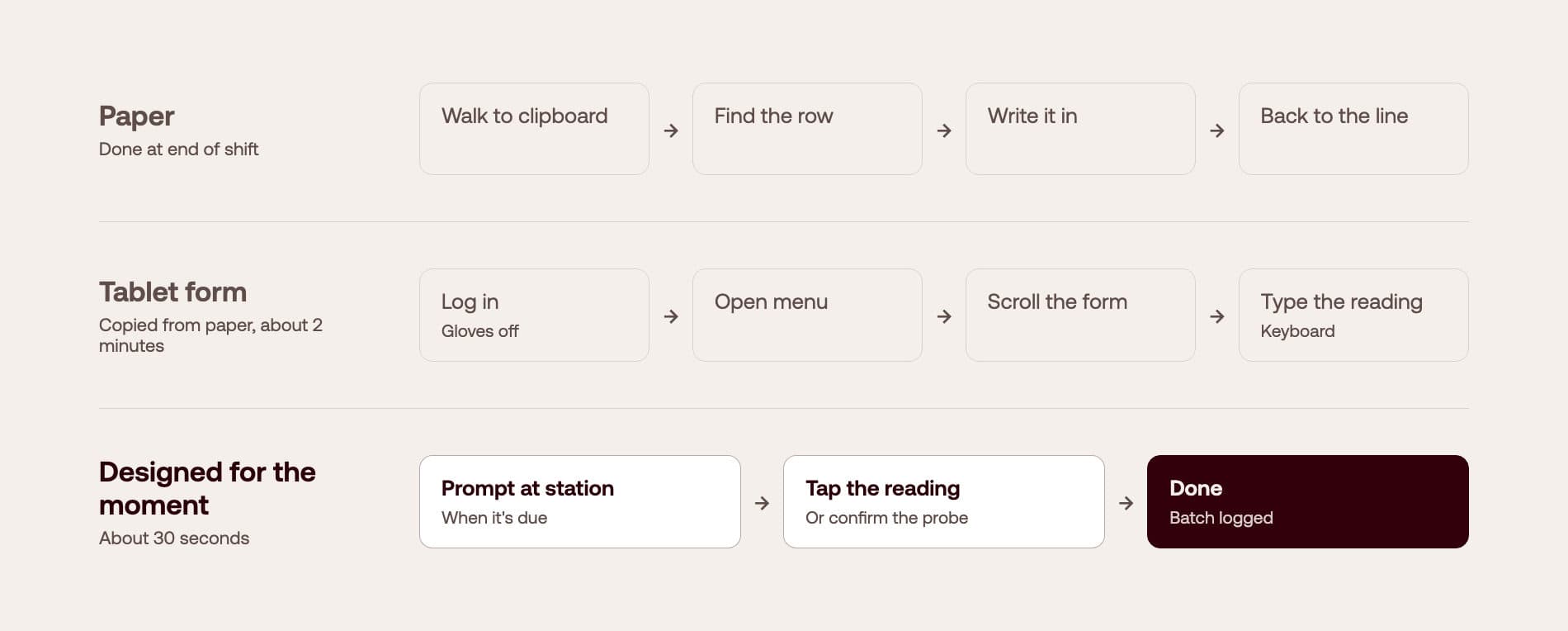
Nobody is trying to cheat. The check takes 30 seconds, the line is running, their gloves are wet, and the form is three steps away. So it gets done later, from memory. Your auditor knows it, and so do you.
That is not a people problem. It is a design problem, and it is one we see across food and beverage businesses of every size.
Why paper and "digital forms" both fail
Most food businesses go one of two ways. They stay on paper, or they move the paper form onto a tablet, field for field.
The tablet version usually makes things worse. Now there is a login, a menu, a scroll, and a keyboard that does not work with gloves on. The check that took 30 seconds now takes two minutes. So it still gets done at the end of the shift, only now it has a timestamp that proves it.
Copying the paper form onto a screen is not going digital. It is the same problem, with a battery.
Design for the moment, not the form
Records get filled in when doing the check is easier than skipping it. That means designing around the moment the check happens, not around the audit report it ends up in.
In practice, it is one tap, not one form. The check is a reading and a yes or no, so show only that. Everything else (who, when, which line, which batch) the system already knows.
Make the targets big enough for wet hands. Buttons the size of a palm, and no keyboard unless something is out of range.
Put the prompt in the right place at the right time: on the screen at the station when the check is due, not on a list in the office.
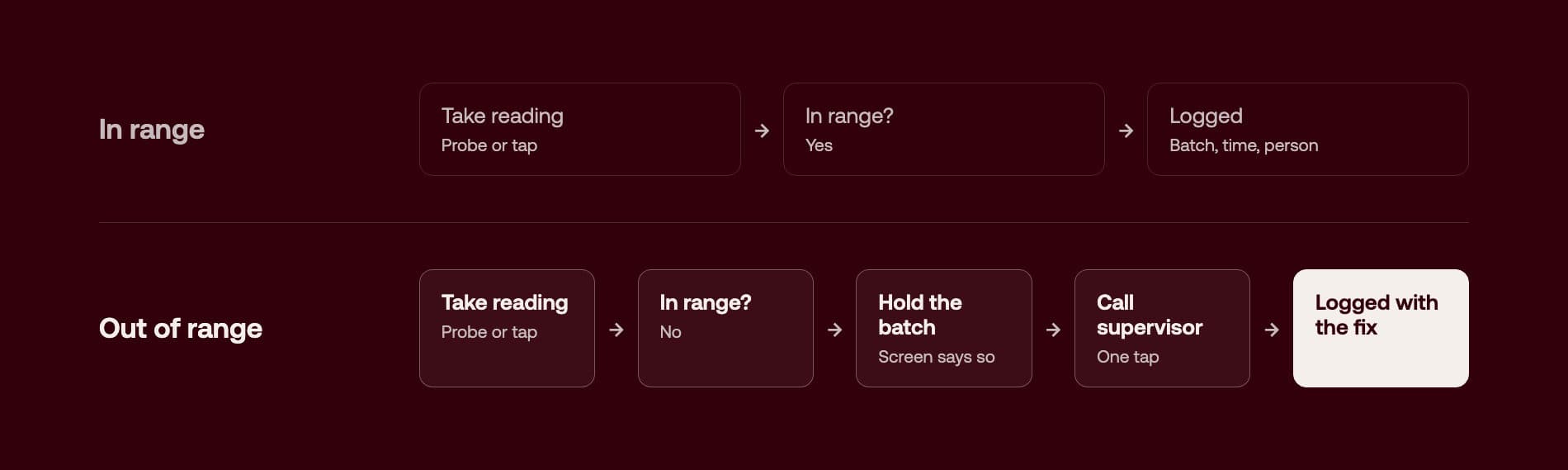
Where a probe or logger already measures it, the person confirms the reading instead of typing it. And when a reading is out of range, the screen does more than turn red. It says what to do next.
None of this is exotic. It is ordinary user experience design applied to the floor instead of the office.
What changes when people actually use it
The obvious win is a clean audit. The bigger one is what you can see.
When checks are logged at the moment they happen, you get a real picture of your floor. Which cooler drifts every afternoon. Which line misses its checks on the night shift. Which batch was on the line when a reading went out.
That last one matters most on a bad day. If you ever have to pull a product, records that were filled in honestly, on time, against a batch number, are the difference between recalling one batch and recalling a week of stock. It is also why traceability works best when your records and your other systems talk to each other.
The casual workforce test
Food businesses run on casual and seasonal staff. Any system that needs a training session will fail by the second week of a new roster.
So test it the simple way. Hand the screen to someone on their first shift. If they can complete a check without asking anyone, it will get used. If they cannot, it will not, no matter how good the report looks.
Where to start
You do not need to replace your whole quality system. Start with the one check your team skips most, and fix that.
Find the checks done in batches: same pen, same time, every shift. That is your starting point. Watch someone do it and count the steps between the check and the record. Then cut it to one step, and see if the records start matching the clock.
Get one check right and your team will ask for the rest.


