R&D Tax Incentive

The R&D Tax Incentive offsets up to 43.5% of eligible spend. We help you work out what qualifies on your build and connect you with a specialist.

Two CodeFish team members in discussion across a meeting room table, one taking notes

How is the claim built into the project?

The R&D Tax Incentive is not complicated if it is handled correctly from the start. The mistake most businesses make is treating it as a tax exercise at the end of the financial year - scrambling to document activities that were never tracked with eligibility in mind.

We identify eligible R&D activities at the scoping stage, structure the project in a way that supports a strong claim, and introduce you to our partner tax specialist who manages the registration, documentation, and ATO lodgement. The process runs alongside your project, not after it.

How does an R&D Tax Incentive claim work?

Identify eligible activities

During project scoping, we identify the components of your build that are likely to qualify as eligible R&D under the ATO's criteria: experimental activities, novel technical approaches, and outcomes that cannot be determined in advance. We do not make the final determination - our partner tax specialist does - but we structure the project to support a strong claim.

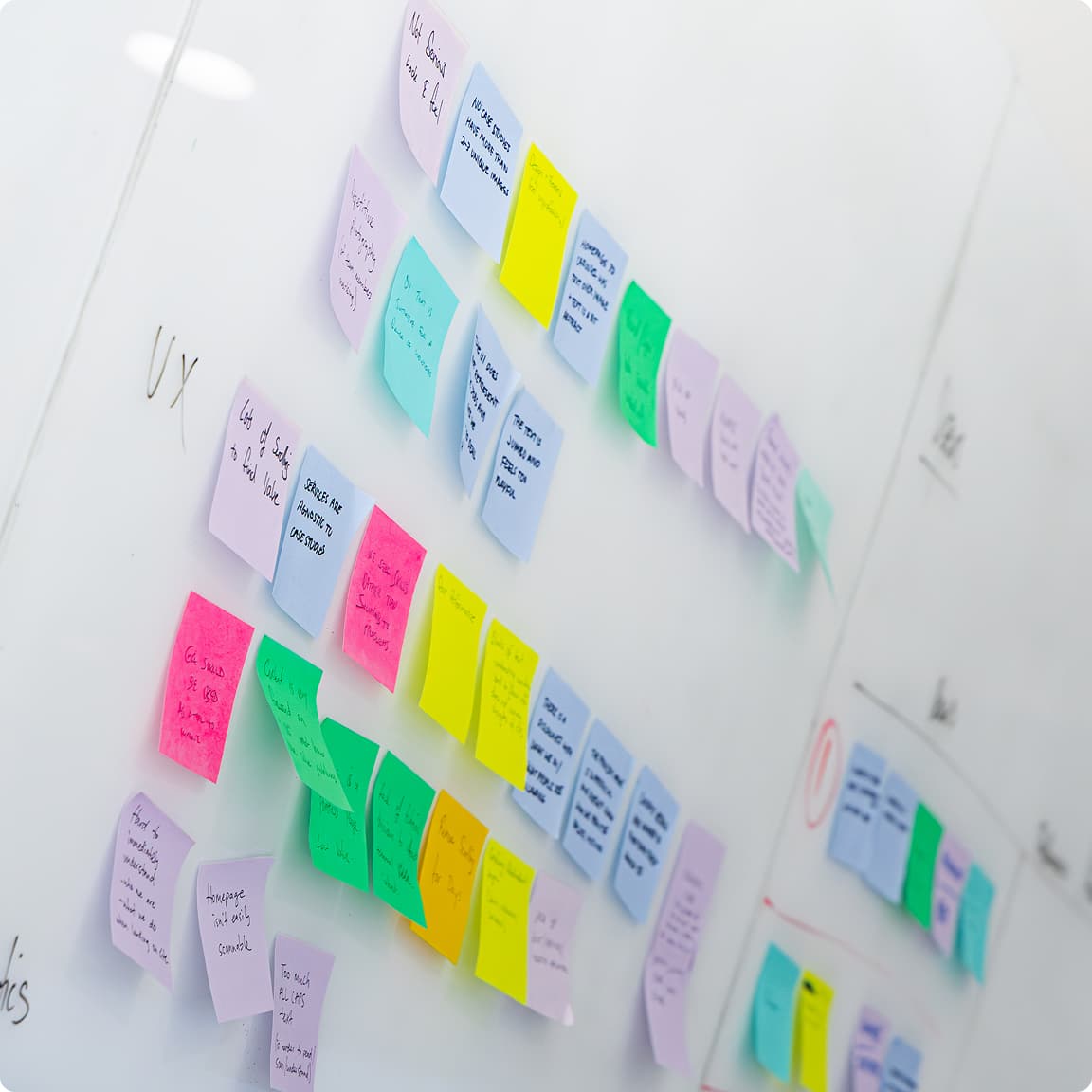
A whiteboard covered in colour-coded sticky notes from a UX workshop

Register with AusIndustry

Our partner tax specialist manages the advance finding and registration process with AusIndustry, and ensures your R&D activities are documented in a way that satisfies ATO requirements. Registration must happen within the relevant income year - timing matters.

Four CodeFish team members working through a problem around a table of laptops, CodeFish Studio sign on the wall

Lodge the claim

At year end, our partner compiles the R&D schedule and lodges it with your tax return. The eligible offset is applied against your tax liability, with refundable benefits available for eligible entities with turnover under $20M.

What can the offset return?

Up to 43.5% tax offset

Eligible small companies (turnover under $20M) can claim a 43.5% refundable tax offset on eligible R&D expenditure. Larger companies access a non-refundable offset of 38.5%. Both represent a meaningful return on qualifying project spend.

What expenditure is eligible?

Staff costs, contractor fees, and overheads directly attributable to eligible R&D activities. For software projects, this typically includes a portion of development, testing, and engineering costs where the work involves genuine technical experimentation.

CodeFish identifies, specialists lodge

We identify what is likely eligible within your project scope. Our partner tax specialist manages the registration, documentation, and ATO lodgement. You get the benefit of both without needing to coordinate the two separately.

Available on Amplify projects

R&D Tax Incentive support is available as part of Amplify engagements where eligible activities are present. It is scoped and structured at the start of the project, not retrofitted at the end of the financial year.

Getting the R&D framing right before the work starts is far easier than reconstructing it at tax time.

What does a claim look like on a sample spend?

These figures are illustrative only. Your tax adviser decides what is eligible, applies the rates for your entity and income year, and calculates the actual benefit.

The sample build

A company under $20M aggregated turnover commissions a $300,000 build where one matching approach needs genuine hypothesis-and-test work.

The eligible spend

Staff, contractor and attributable overhead costs tied to that experimental work come to $120,000.

The refundable offset

At the 43.5% refundable offset that spend would produce $52,200, payable as a cash refund even if the company has no tax to pay that year.

What is not claimed

The other $180,000 is routine development, not R&D. Above the $20M threshold, the 38.5% non-refundable offset would apply instead.

R&D Tax Incentive questions we get asked

The core test is whether the project involves genuine experimental activities — where the technical outcome cannot be determined in advance and requires a systematic investigation to resolve. Custom software development often qualifies, particularly where novel approaches or new integrations are involved. We assess eligibility at scoping and give you a clear view before you commit to the process.

Companies with aggregated turnover under $20M can access a 43.5% refundable offset, meaning it can reduce your tax liability below zero and produce a cash refund. Companies above that threshold access a 38.5% non-refundable offset, which reduces tax owed but cannot produce a refund. Both are meaningful. Your tax specialist will confirm which applies to your entity.

Registration with AusIndustry must be completed within ten months of the end of the income year in which the R&D activities were conducted. That sounds like plenty of time, but documentation gathered throughout the project is significantly stronger than documentation assembled from memory at registration. Starting at scoping makes the claim more defensible and more complete.

We work with a specialist R&D tax advisory firm experienced in ATO-compliant claims for software and technology projects. We make the introduction as part of the project onboarding process. All tax advice and lodgement is managed by them, not by CodeFish.

R&D Tax Incentive support is structured into Amplify projects where eligible activities are identified at scoping. It is not available as a standalone service independent of a CodeFish project engagement.

You need records made while the work happens that show what you were trying to find out, what you tried, and what you learned. That means a written hypothesis for each experimental activity, the tests you ran, the results, and the decisions that followed. It also means timesheets or other records linking staff and contractor time to those activities, and the invoices behind the spend. On a CodeFish project, much of this comes from work we already produce: tickets, technical notes, test results and the code history. Your tax adviser will tell you what else they need and in what form, so it is captured as you go rather than rebuilt at year end.

If AusIndustry or the ATO reviews your claim, you answer with the records you kept during the project, and your tax adviser manages the response. Reviews look at whether the registered activities were genuine R&D and whether the expenditure claimed relates to them. Where a review finds that an activity or cost was not eligible, the offset can be reduced and any overpaid amount may have to be repaid. That is why the claim is framed at scoping and documented as the work happens. A claim built on contemporaneous records is far easier to defend than one assembled from memory after the financial year ends.

No. Routine software development does not qualify on its own, even when it is new to your business. Building screens, setting up user logins, writing standard reports or connecting systems with a well-documented method are generally not R&D, because a competent developer can work out the answer in advance. What can qualify is the part of a project where the outcome is genuinely unknown and the only way to find out is to test a hypothesis and measure the result. Most builds are a mix of both. We help you separate the two at scoping, and your adviser confirms where the line sits for your project.

The benefit lands after you lodge your company tax return for the income year in which the R&D was done, once the ATO processes it. Registration with AusIndustry comes first, within ten months of the end of that income year, and the R&D schedule is lodged with the return. For a company that is eligible for the refundable offset and has no tax to pay, the result is a cash refund. For a company with tax to pay, the offset reduces what is owed. The exact timing depends on when you register and lodge, so your adviser will tell you what to expect for your year.

A failed experiment does not by itself rule out an R&D Tax Incentive claim, because the incentive is aimed at work whose outcome could not be known in advance. If you tested a hypothesis properly, recorded what you tried and learned that the approach does not work, that work can still be eligible R&D. What matters is the systematic method and the records, not whether the result was the one you hoped for. On a CodeFish project, a failed approach is written up the same way as a successful one, with the hypothesis, the tests and the decision that followed. Your tax adviser confirms whether the activity qualifies for your claim.

Most of the R&D Tax Incentive paperwork comes from records the project already produces, so the extra load on your team is usually small. On a CodeFish project, tickets, technical notes, test results and the code history capture the experimental work as it happens. Your team's main jobs are keeping time records that link staff to those activities, holding on to the invoices, and answering your adviser's questions at year end. Your tax adviser handles the registration with AusIndustry and prepares the schedule that goes with your company tax return. If the paperwork looks likely to cost more than the benefit, we will tell you at scoping rather than let you find out later.

Planning for an R&D Tax Incentive claim changes how the experimental parts of the project are recorded, not what you are building or what you pay us. The build is scoped and quoted on what the software needs to do, whether or not a claim is made. Where part of the work is genuinely experimental, we frame it as a hypothesis, plan the tests and record the results as we go. That adds structure to work that would happen anyway, and it gives you better evidence of what was tried and why. We never shape a project around the offset at the expense of the outcome you need.

If part of the work turns out not to be eligible, it simply stays out of the claim and is treated as an ordinary business cost. Eligibility is never fully known at the start, because some problems that look experimental are solved quickly with a known method. That is why we separate likely R&D from routine development at scoping and revisit the split as the build progresses. Your tax adviser decides what goes into the claim based on the records, and leaving out doubtful items is the safer choice. A smaller claim that holds up is worth more to you than a larger one that has to be repaid after a review.

Who we work with

TP Records
Department of Primary Industries (PIRSA)
JKSM
Energy Logistix
REDARC
MAXMINE
SAHMRI
Seeley
CSIRO