
Why legacy systems are costing you time and frustrating users — and how modernising tech can fix it
Navigating legacy systems can always be challenging. With the way we interact as users often adapting to the software, rather than the other way around. This is inertia at its finest, and thankfully in most use cases, this is not life threatening. As we used to say in media “we’re not saving lives.”
But what if you were in fact, saving lives?
Emergency response is a high-stakes world where every second counts. Whether it’s coordinating a volunteer firefighting team, dispatching paramedics, or managing critical infrastructure, response times can make the difference between resolution and escalation. Yet, many organisations still rely on systems built 20 years ago designed for a different era with different demands.
At CodeFish Studio, we understand that modernising isn’t just about upgrading technology—it’s about improving how users interact with that technology. Whether you’re managing a large team of volunteers or rolling out updates across thousands of stakeholders, the challenge isn’t just delivering better tools—it’s ensuring those tools are embraced, trusted, and truly effective. Chatting with our UX Design Lead, Anthony Gulin, we discuss how to tackle the benefits of transition from Legacy to Modern, whilst ensuring users come along for the ride.
Systems Slowing You Down
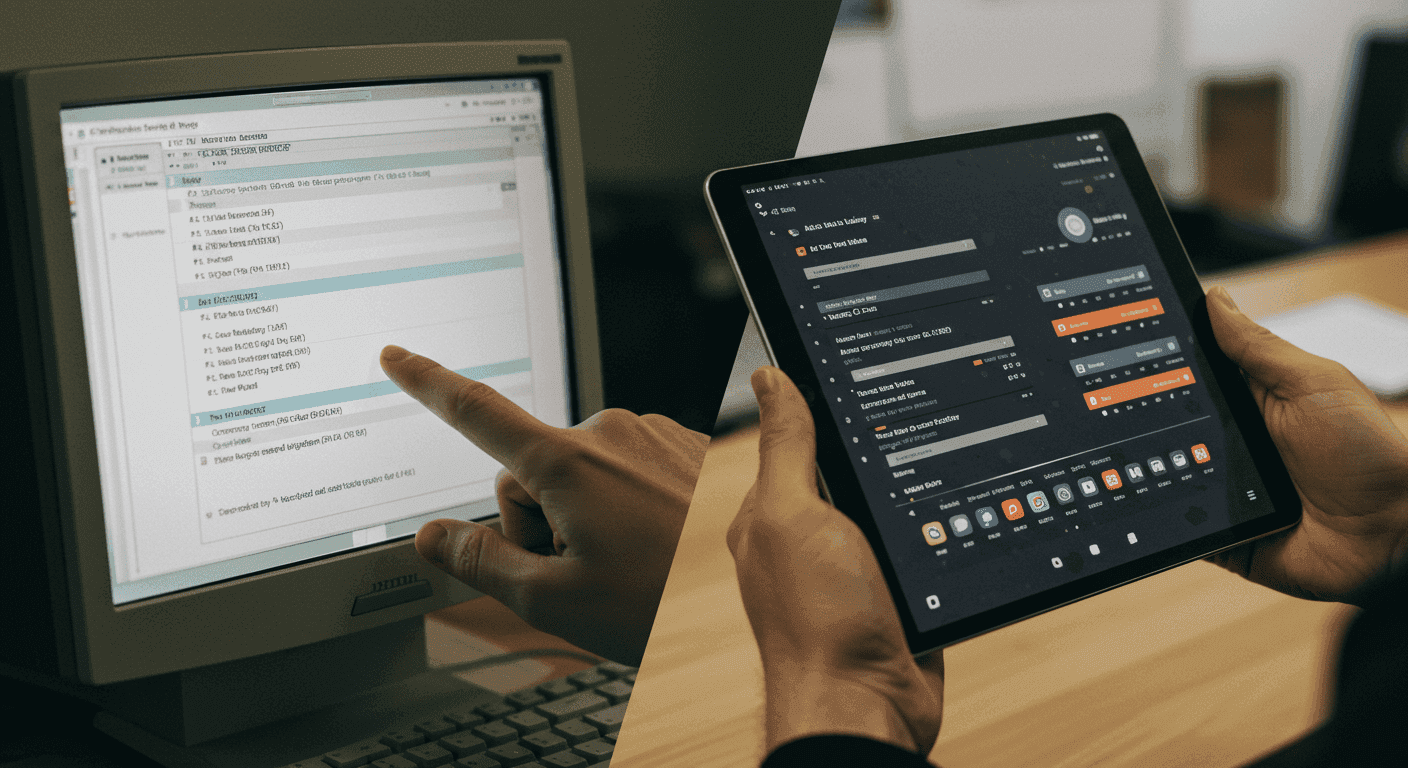
Legacy systems were built with the best intentions: capture everything, display everything, and leave no stone unturned. But this “everything-at-once” approach overwhelms users with dense, text-heavy interfaces that prioritise comprehensiveness over usability.
- Cluttered User Interfaces (UI): Too much data in too many places slows comprehension.
- Manual, Repetitive Processes: Tasks that should take seconds drag on for minutes, reducing responsiveness.
- Fragmented Workflows: Information is siloed across multiple systems, forcing users to piece it together themselves.
The result? Instead of being empowered, users are frustrated, hesitant, or fatigued—particularly when it comes to adapting to new processes.
Speed, Simplicity, and Satisfaction
Modernising user interfaces and experiences is about more than aesthetics. It’s about making systems intuitive and faster—so users can focus on decision-making rather than navigating clunky workflows. Here’s how we achieve that:
1. Designing for Speed
- Intuitive Layouts: Reduce visual clutter by grouping related data logically.
- Visual Cues: Use colours, icons, and graphics to help users process information at a glance, enabling quicker decisions.
2. Improving Workflow Efficiency
- Automated Prompts: Replace time-consuming manual inputs with smart, automated reminders and alerts.
- Integrated Frameworks: Connect multiple systems into a single, seamless workflow to eliminate toggling between platforms.
3. Prioritising Usability for All Users
- Consistency in UX: Ensure familiar layouts and navigation paths to ease the transition for legacy users.
- User Feedback Loops: Involve the people who rely on the system daily to refine the design and functionality.
Managing Change for Large User Bases
For organisations with large user bases—whether it’s hundreds of volunteers or thousands of employees—the transition to a modern system can feel daunting. People are often hesitant to embrace change, especially if they’ve grown comfortable with familiar (albeit inefficient) processes.
At CodeFish Studio, we know that successful adoption is as much about change management as it is about system design. Our approach ensures that users are not just onboarded—they’re empowered.
- Phased Rollouts: Start small, gather feedback, and refine before scaling.
- Training and Support: Equip users with resources that make the system second nature, not second-guessable.
- Intuitive First Impressions: Ensure new designs feel logical and easy to use from day one, reducing resistance to change.
Faster Responses, Happier Users
Every organisation is unique, but the goal is the same: speed and satisfaction.Modernising your system isn’t just about catching up with technology—it’s about giving your users the tools they need to do their best work quickly and confidently.
At CodeFish Studio, we deliver:
- Customised Solutions: Tailored designs that meet your specific needs.
- User-Focused Interfaces: Intuitive systems designed with real users in mind.
- Streamlined Workflows: Faster processes that keep teams moving and focused on what matters most.
By transforming outdated systems into streamlined, user-friendly experiences, we help organisations cut response times, reduce errors, and improve user satisfaction—all while managing change with care.
Why CodeFish Studio?
We’re not just about building better software. We’re about:
- Listening First: Understanding the unique challenges your organisation faces.
- Collaborative Development: Partnering with you to design systems users will embrace.
- Delivering Value: Faster workflows, simpler processes, and happier teams.
Change doesn’t have to be hard. Let’s reimagine your systems together—making them faster, simpler, and more user-friendly for everyone.
Ready to take the first step? Let’s chat.


