
Every piece you bought was nice. The chair, the rug, the lamp. Then it all landed in the same room and nothing went together, because nobody decided what the room was before they started buying.
Software fills up the same way. And the fix most teams reach for, adding more, is the most expensive one on the table.
What no discipline actually costs
It rarely shows up as a line item. It shows up as the same argument every second sprint, because it was settled in a conversation instead of settled properly. Two versions of the same screen, built by two people who never compared notes. A new starter who takes three months to get useful, because there is no answer to how we do this here, only people to ask. A support inbox full of customers confused by two parts of the same product behaving differently.
None of that gets logged as rework. It gets logged as the cost of doing business, and it grows with every screen you add.
More pieces will not fix it
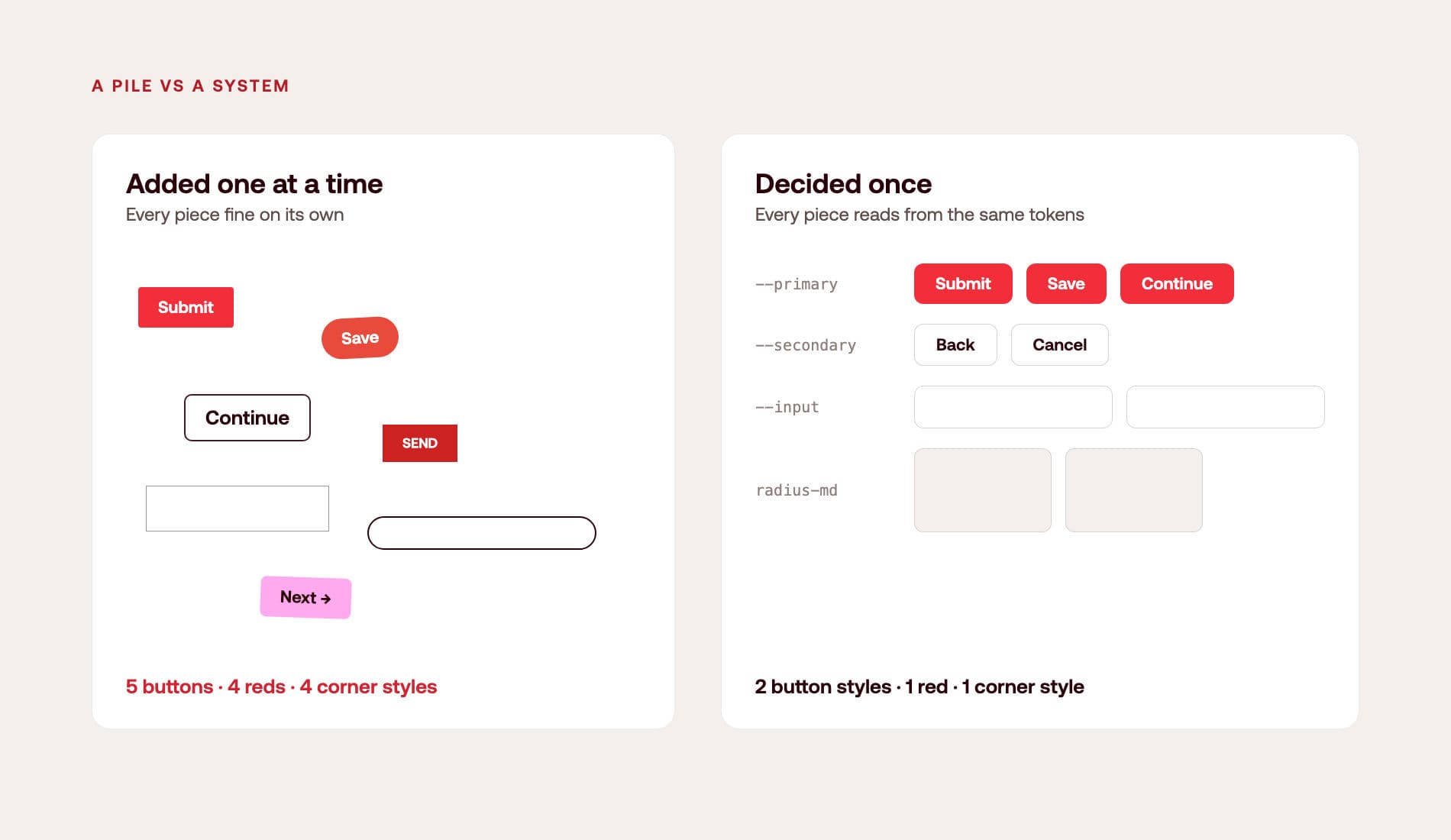
The usual response is to add. Another component, another library, another tool, another screen generated by AI in an afternoon. Each one is fine on its own. Together they make the problem bigger, because every new piece is one more thing that has to fit with everything else.
AI makes this faster, not better. It is very good at producing more things that look like what you already have. It cannot tell you what the product is meant to be. Let it fill the room and it will commit to a guess at a scale you never would have. One wrong chair you send back. Forty screens of them is a rebuild.
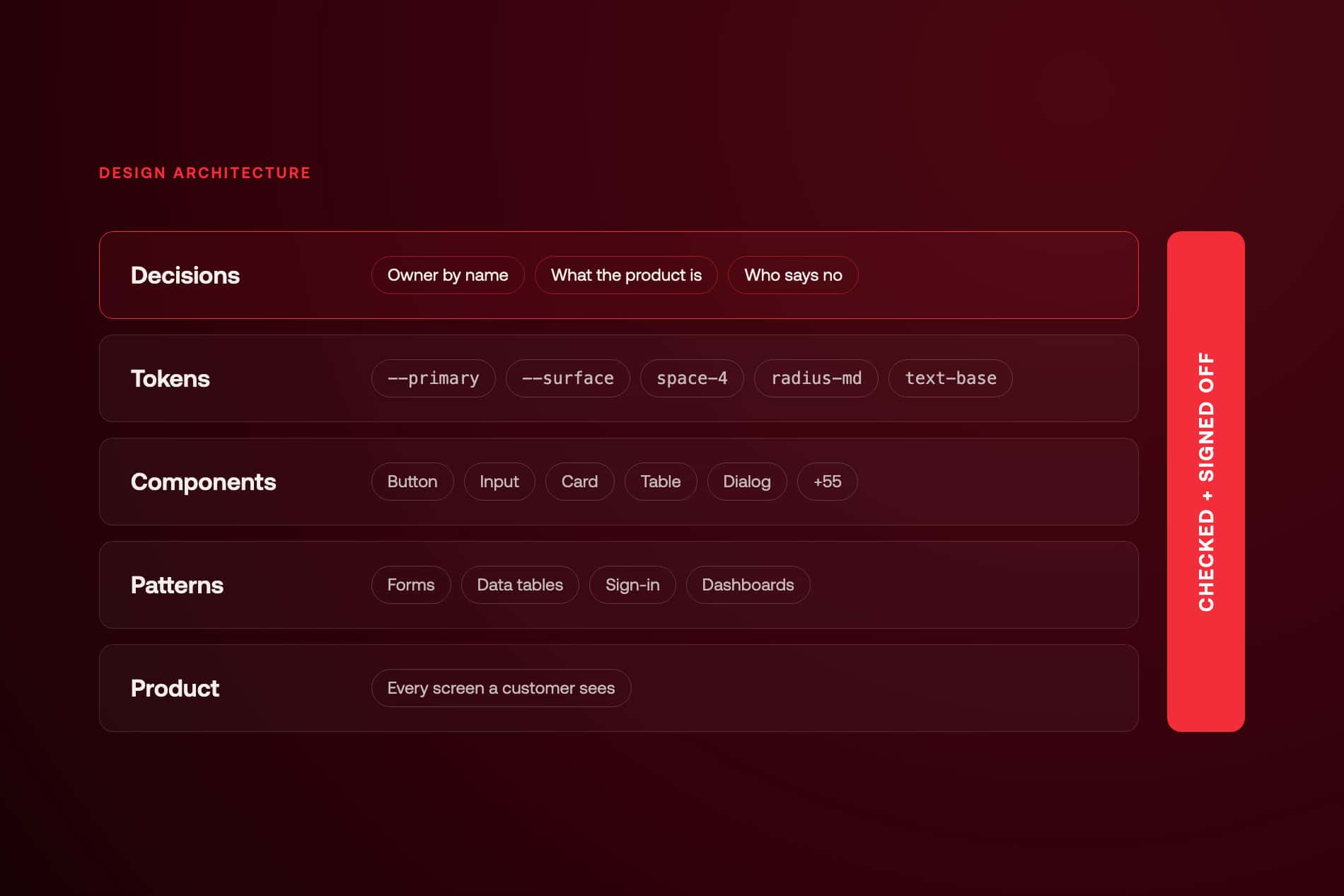
A design system on its own does not solve it either. A component library is a well organised pile of nice things. Nothing in a pile says what may sit beside what, or who gets to say no.
Discipline is cheaper
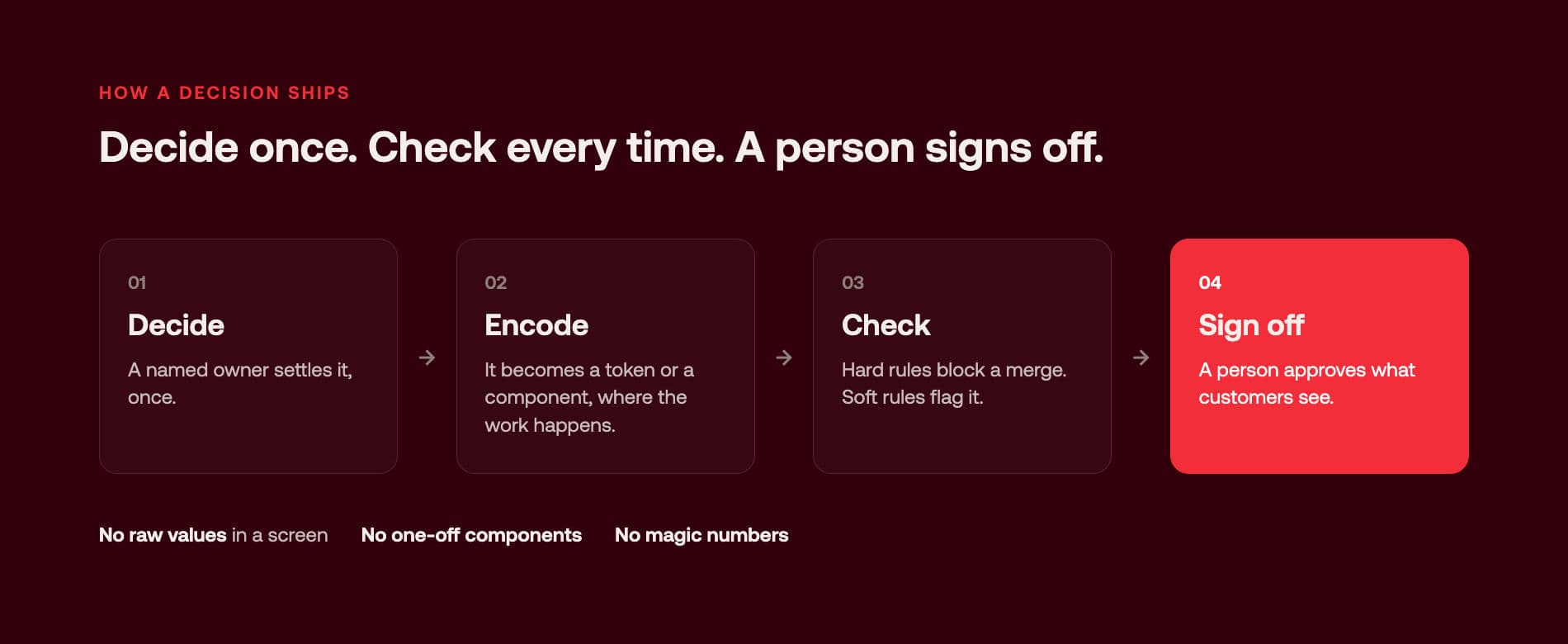
Deciding once costs less than deciding every sprint. Four things make that stick. Somebody owns the design decisions by name, as part of their actual job. The decisions live where the work happens, not in a deck shown once and filed. They can be checked, so quality stops depending on who was in the room that day. And a person signs off anything a customer will see.
That is design operations. It sounds like a design-team concern. It is a cost one. Every decision made up front is a decision your team does not argue about, rebuild or apologise for later.
And it presents better
Customers never see your component library. They see whether the product feels like one place or like five people built it without speaking. Consistency reads as trust. A product that behaves the same way everywhere feels finished, and people are more willing to pay for something that feels finished.
This is how we work at CodeFish. We decide what the product is before anyone builds anything, we keep those decisions where they can be checked, and a person approves what customers see. It is not glamorous. It is why we can move quickly without the product filling up with nice things that do not belong together.
So walk through your own product the way you would walk through a house. Does it feel like one place? And who is allowed to say no to the chair?


